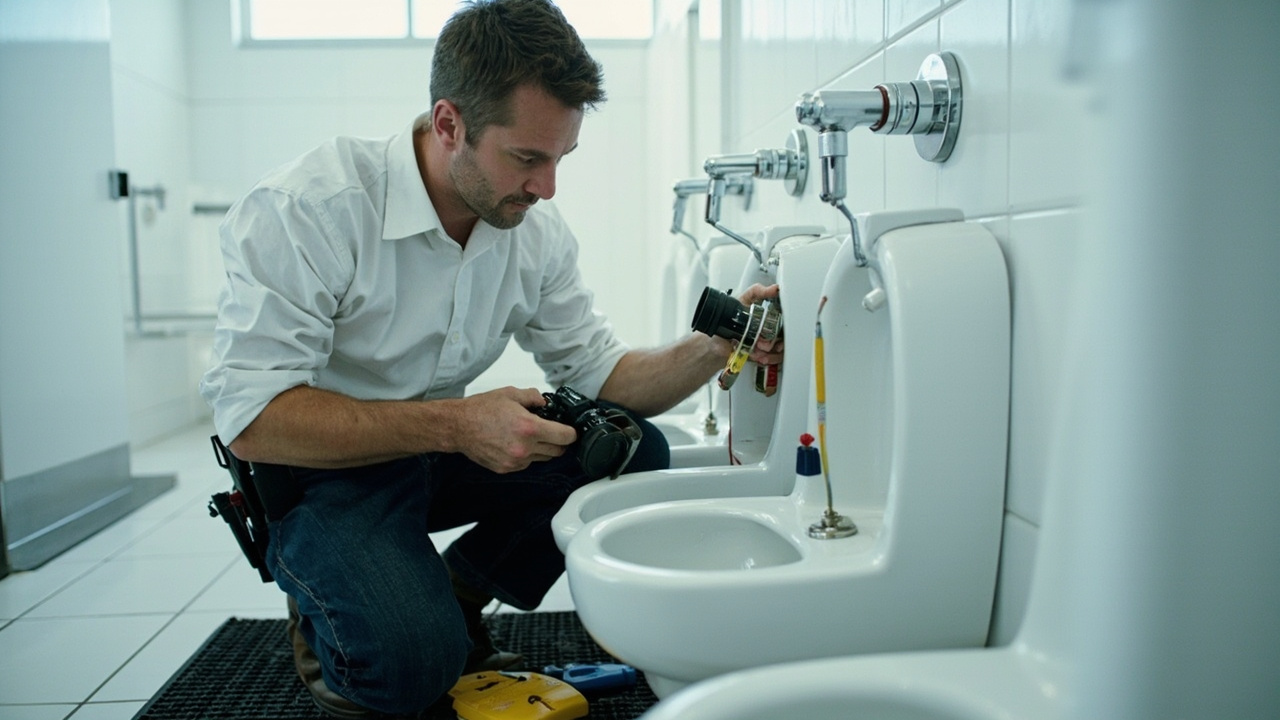
Baltimore's municipal water supply contains chlorine and chloramine disinfectants that degrade rubber diaphragms faster than in cities using alternative treatments. The city's water hardness ranges from moderately hard to hard depending on your location, causing mineral buildup in control stops and vacuum breakers. Commercial properties in areas served by older distribution mains also experience sediment infiltration, which clogs the small orifices inside flushometer bodies. These local water conditions mean commercial flush valves require more frequent diaphragm replacement than the manufacturer's recommended intervals.
Keystone Plumbing Baltimore technicians understand these regional factors because we work exclusively in this market. We recognize the signs of chlorine-accelerated diaphragm failure versus mechanical wear. We stock parts compatible with Baltimore's water chemistry and recommend fixture upgrades when buildings experience chronic failures due to water quality. Our familiarity with local building code enforcement practices also ensures your repairs meet inspection standards during health department reviews or tenant improvement approvals, protecting your business from compliance issues.