Menu

Wet Spots in Yard Baltimore – Expert Underground Leak Detection and Drainage Solutions

Keystone Plumbing Baltimore identifies hidden water line breaks, sewer leaks, and drainage failures causing wet spots in your yard using advanced leak detection equipment and proven excavation techniques.

Slider Image 1
Slider Image 2
Slider Image 3
Slider Image 4
Slider Image 5
Slider Image 7
Slider Image 8
Slider Image 9
Slider Image 10
Slider Image 11

Why Baltimore Lawns Develop Persistent Wet Spots

You walk across your yard and feel the ground give way beneath your shoes. Soggy patches in lawn areas that should be firm and dry signal an underground problem, not a watering issue.

Baltimore's aging infrastructure puts pressure on residential water systems. Homes built before 1960 often have galvanized steel or clay pipe that corrodes over time. The freeze-thaw cycles we experience each winter expand and contract soil, stressing these buried lines until they crack. When a water line fails underground, you get unexplained standing water that persists even during dry weather.

Pooling water in yard areas can also point to failed sewer laterals. Tree roots from the mature oaks and maples common in neighborhoods like Hampden and Roland Park infiltrate clay sewer pipes, cracking joints and creating backups. Wastewater seeps into surrounding soil, creating saturated areas in grass that smell faintly of sewage.

Poor yard grading compounds these issues. Many Baltimore properties were graded decades ago, and soil settles over time. Water that should drain toward the street instead pools near your foundation, creating damp spots in lawn areas closest to your home. This standing water can migrate toward your basement, threatening your foundation and creating mold conditions.

The clay-heavy soil throughout Baltimore County retains moisture longer than sandy soils. Once groundwater saturates these clay layers, it takes weeks to dry out naturally. If you see the same wet area repeatedly after each rain, you have a plumbing failure or drainage design flaw that requires professional diagnosis.

Why Baltimore Lawns Develop Persistent Wet Spots
How We Pinpoint and Repair Underground Water Issues

How We Pinpoint and Repair Underground Water Issues

Guessing where a pipe breaks wastes time and destroys landscaping. We use electronic leak detection equipment that listens for the acoustic signature of pressurized water escaping underground. High-frequency sensors pick up the distinct sound of water jetting through a crack in copper or PVC, even when buried three feet deep under sod.

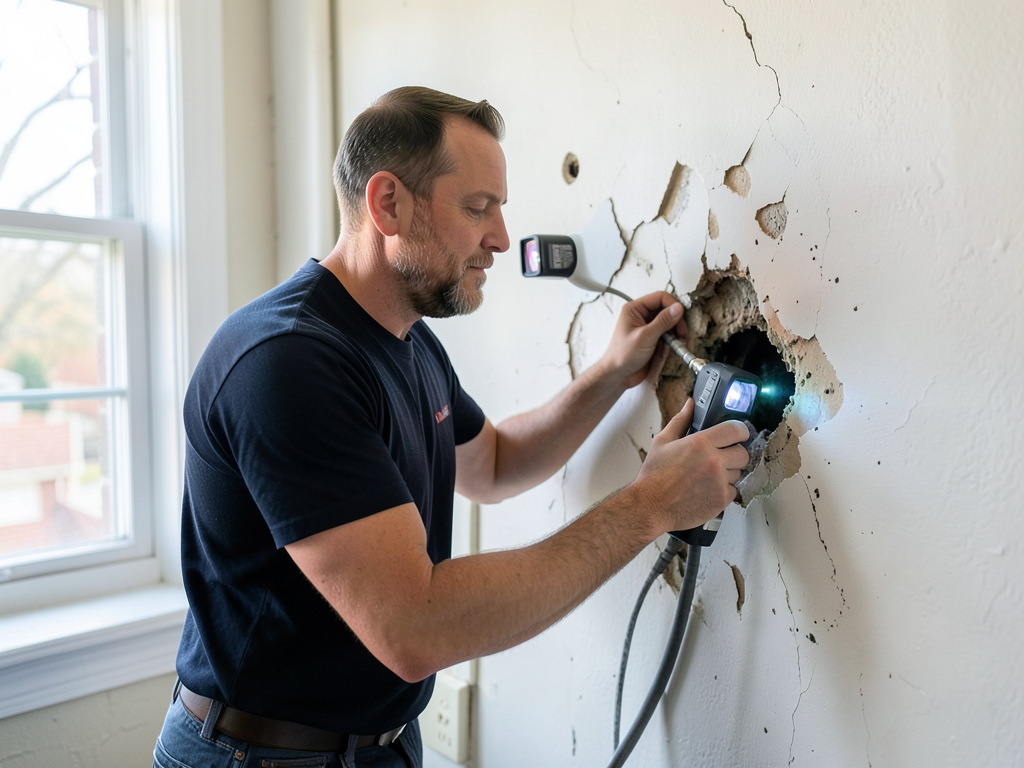
For sewer line diagnostics, we deploy fiber optic camera inspection through cleanout access points. The camera feed shows us exactly where roots penetrate joints, where pipe sections have collapsed, and where bellies in the line trap waste. This video evidence eliminates speculation and shows you the exact failure point before we dig.

Once we locate the problem, we excavate surgically. Trench width stays minimal to preserve your lawn and reduce restoration work. For water line repairs, we cut out the damaged section and install PEX or copper pipe with compression fittings rated for underground service. These connections resist the soil movement that damaged the original galvanized line.

Sewer lateral repairs often require replacing an entire section of clay pipe with Schedule 40 PVC. We maintain proper slope during installation to prevent future waste accumulation. Backfill goes down in compacted layers to prevent settling that could stress the new pipe joints.

Drainage correction requires regrading or installing French drain systems. We dig perforated pipe trenches lined with filter fabric and gravel, creating pathways for groundwater to move away from problem areas. The discharge point directs water toward storm drains or swales, not toward neighboring properties.

Every repair includes pressure testing for water lines or flow testing for drains before we restore landscaping. You get documentation that the system functions correctly before we close the worksite.

What Happens During Your Yard Leak Investigation

Wet Spots in Yard Baltimore – Expert Underground Leak Detection and Drainage Solutions
01

Initial Site Assessment

We walk your property and map every wet area, noting proximity to water lines, sewer laterals, downspouts, and irrigation zones. Meter readings taken while all fixtures stay off reveal whether water consumption continues, confirming an active leak. Soil probing tests ground saturation depth and helps us rule out surface drainage problems versus subsurface failures.
02

Leak Isolation and Detection

Acoustic sensors get placed along suspected pipe runs while we pressurize the system. The equipment triangulates the loudest signal point, marking the leak location within inches. For sewer concerns, camera insertion through cleanouts provides real-time video of pipe interiors. You watch the monitor with us and see exactly what failed, whether that's root intrusion, joint separation, or complete pipe collapse.
03

Repair and Restoration

Excavation exposes only the damaged section, minimizing lawn disruption. Failed pipe gets removed and replaced with materials rated for Maryland soil conditions. Pressure tests or flow tests verify repair integrity before backfill. Soil compaction happens in lifts to prevent future settling. Sod replacement or seeding restores your lawn to pre-repair condition within the work zone.

Why Baltimore Homeowners Trust Keystone Plumbing for Underground Diagnostics

Baltimore's plumbing infrastructure varies wildly by neighborhood age and construction era. Homes in Federal Hill have different pipe materials than new construction in Canton. We know which decades used problematic materials and where failures typically occur.

Our technicians understand Maryland building codes for water service depth, backflow prevention, and sewer lateral responsibilities. When we replace a section of your water main, the work meets current code even if your home predates those requirements. This protects you during home sales or inspections.

We carry specialized equipment for the soil conditions in this region. Clay soil requires different excavation tools than sandy loam. Our trenchers and compaction equipment handle the dense clay common from Towson to Catonsville without creating future settling issues.

Tree root infiltration into sewer lines happens constantly in established Baltimore neighborhoods. Mature root systems from street trees planted 50 years ago seek out moisture in sewer pipes. We know which tree species cause the most aggressive root growth and where to expect damage based on your landscaping.

Foundation proximity matters during excavation. Many Baltimore rowhomes and twins have minimal clearance between the building and property lines. We plan dig sites that preserve structural stability and avoid disturbing adjacent foundations. This requires understanding how buildings were constructed in different eras.

Water table fluctuations in areas near the Patapsco River or Jones Falls affect how quickly trenches flood during excavation. We schedule work around weather patterns and have dewatering pumps ready when groundwater rises during dig operations.

You get transparent communication throughout the process. We show you the damaged pipe, explain what failed, and discuss repair options before starting work. No surprise billing or scope creep.

What to Expect When You Call About Yard Wetness

Same-Day Diagnostic Visits

We schedule site assessments within 24 hours of your call. Most leak detection work happens the same day we arrive. If we need to return with excavation equipment, you get a scheduled date before we leave the property. Emergency water line breaks that threaten your foundation or create flooding hazards receive immediate response, including after-hours and weekend availability. Our goal is stopping water damage progression as quickly as possible.

Comprehensive Underground Diagnostics

Initial evaluation includes visual inspection, meter testing, and moisture mapping. If we suspect a specific line, we deploy leak detection equipment or camera inspection before recommending excavation. You receive a written assessment that identifies the problem source, repair options, and associated costs. We explain whether the issue stems from your private lateral or municipal infrastructure, clarifying responsibility before work begins. This eliminates confusion about who pays for what.

Permanent Underground Repairs

Patches and temporary fixes fail in clay soil conditions. We replace damaged sections with materials engineered for ground movement and freeze-thaw cycles. Water line repairs use compression fittings or fusion welding that exceed the strength of the original pipe. Sewer line replacements use Schedule 40 PVC with rubber gasket joints that flex with soil settlement. You get a repair designed to outlast the surrounding pipe, not just stop the immediate leak.

Post-Repair Monitoring Guidance

After completing underground repairs, we walk you through monitoring steps to confirm the problem stays resolved. This includes watching for new wet spots, checking meter readings periodically, and knowing what signs indicate other potential failures in aging pipe systems. We provide documentation of the work performed, including photos of the damaged section and installed materials. If your repair involved sewer line replacement, you receive camera footage showing the new pipe installation.

Frequently Asked Questions

You Have Questions,
We Have Answers

How do I fix a wet spot in my yard? +

First, identify the source. Check for broken irrigation lines, damaged gutters, or leaking pipes underground. If the spot persists after rain, you may have drainage issues from Baltimore's clay-heavy soil, which drains slowly. Install a French drain to redirect water away from the area. Regrade the yard to slope away from your foundation. For minor spots, aerate compacted soil and add topsoil mixed with compost to improve absorption. If the wet spot sits near your home's foundation or you see standing water after every storm, call a plumber to inspect for sewer line breaks or compromised water mains.

What causes wet spots in the yard? +

Wet spots form from several issues. Broken water mains or sewer lines leak underground. Downspouts dump roof runoff into concentrated areas. Baltimore's clay soil holds moisture and prevents drainage. Poor grading directs water toward low spots instead of away from your property. Broken irrigation systems or outdoor spigots leak continuously. Seasonal water table rise during spring can push groundwater to the surface. Compacted soil from foot traffic or heavy equipment prevents water absorption. If the wet spot smells foul or grows larger daily, suspect a sewer or water line break and get a professional inspection immediately.

How to fix a muddy spot in yard? +

Stop using the muddy area until you fix the drainage problem. Temporary fixes make it worse. Install a dry creek bed with river rock to channel water through the space. Aerate heavily compacted soil, then add coarse sand and compost to improve drainage. For persistent mud in Baltimore's clay soil, excavate 6-8 inches deep and install a perforated drain pipe surrounded by gravel, then cover with topsoil. Plant water-tolerant ground cover like creeping Jenny. If mud appears suddenly or smells like sewage, you may have a broken pipe underground that needs professional repair before landscaping.

How to fix water runoff in yard? +

Baltimore's frequent storms and clay soil create runoff challenges. Extend downspouts at least 10 feet from your foundation with buried drain pipes. Install a rain garden in low areas with native plants that absorb excess water. Build a swale (shallow ditch) along property lines to redirect flow. Add a dry well where water collects to let it percolate slowly into the ground. For severe runoff affecting your foundation or basement, install a curtain drain uphill from your home. If water runs from neighboring properties, grading corrections and strategic landscaping berms can redirect flow away from your yard.

How Baltimore's Clay Soil and Aging Infrastructure Create Yard Drainage Emergencies

Baltimore sits on Piedmont clay that shrinks during dry summers and swells during wet springs. This expansion and contraction cycle stresses rigid pipe materials like cast iron and clay used in pre-1970 construction. Neighborhoods built during the postwar housing boom now face simultaneous infrastructure failures as these materials reach end of service life. When you add freeze-thaw damage from our winter temperature swings, underground pipe failure becomes inevitable rather than occasional. Wet spots in your yard during dry weather almost always indicate a pressurized water line leak or cracked sewer lateral, not poor drainage alone.

Local plumbing expertise matters because Baltimore's infrastructure predates modern standards. Your sewer lateral may be clay pipe laid in the 1940s without proper bedding or slope. Water mains in older sections run through neighborhoods as galvanized steel that corrodes from the inside out. A technician unfamiliar with these regional construction practices might misdiagnose surface drainage as the problem and miss the underground leak destroying your foundation. We work in these conditions daily and recognize failure patterns specific to Baltimore's housing stock and soil composition.
Plumbing Services in The Baltimore Area

Discover our conveniently located service hub, strategically positioned to ensure rapid response times across the region. While our office welcomes inquiries, our skilled technicians are typically out in the field, ready to bring our expertise directly to your doorstep. We are committed to serving the entire area efficiently, making sure expert plumbing assistance is always just a call away, wherever you are.

Address:
Keystone Plumbing Baltimore, 312 N Martin Luther King Jr Blvd, Baltimore, MD, 21201

Additional Services We Offer

Our news updates

Latest Articles & News from The Blogs

Adding a Luxury Wet Bar to Your Rooftop Deck in South Baltimore Imagine sipping a cocktail on your rooftop deck…

Adding a Luxury Wet Bar to Your Rooftop Deck in South Baltimore

Adding a Luxury Wet Bar to Your Rooftop Deck in South Baltimore Imagine sipping a cocktail on your rooftop deck…

Finding and Fixing Hidden Slab Leaks Under Your Beverly Hills Home

Finding and Fixing Hidden Slab Leaks Under Your Beverly Hills Home A hidden slab leak can silently destroy your Beverly…

How to Repair a Leaky Shower Valve in Your Cross Keys Condo

How to Repair a Leaky Shower Valve in Your Cross Keys Condo Living in the Village of Cross Keys means…

Contact Us

Wet spots spread as underground leaks worsen. Call Keystone Plumbing Baltimore at (443) 443-9099 right now for same-day leak detection. We locate the failure, explain your options, and restore your yard to dry, stable conditions.