
How to Design an ADA Compliant Bathroom for Aging in Place in Park Heights
Designing an ADA compliant bathroom in Park Heights requires understanding both federal accessibility standards and Maryland’s specific building requirements. For homeowners looking to age in place safely, the right modifications can mean the difference between independence and costly institutional care. This guide covers everything from grab bar placement to fixture selection, all tailored to the unique needs of Park Heights residents. Maryland Accessibility Code COMAR 05.02.02.
Understanding ADA Requirements for Park Heights Homes
The Americans with Disabilities Act sets minimum accessibility standards, but Maryland’s COMAR (Code of Maryland Regulations) Title 05.02.02 adds state-specific requirements that affect Park Heights homeowners. These regulations apply to both new construction and major renovations in the area. Americans with Disabilities Act guidelines.
Local enforcement comes through the Baltimore City Department of Housing & Community Development, which inspects accessible bathroom modifications. Homeowners should obtain permits before starting work to ensure compliance and avoid costly rework later.
Key measurements for Park Heights bathrooms include:
- Minimum 30-inch by 48-inch clear floor space for wheelchair maneuvering
- 60-inch diameter turning radius for 180-degree turns
- 17-19 inch toilet seat height from floor
- 36-inch minimum doorway width
Essential ADA Bathroom Components for Park Heights Homes
Creating a truly accessible bathroom involves multiple elements working together. Each component must meet specific standards while fitting within the existing Park Heights home structure.
Accessible Toilets and Fixtures
Comfort height toilets are essential for ADA compliance. These fixtures sit 17-19 inches from floor to seat, making transfers from wheelchairs easier. Look for models with elongated bowls and pressure-assisted flushing for reliability.. Read more about Wall-Hung vs Floor-Mounted Toilets for Your Small Bathroom in Fells Point.
Lever-style flush handles are required instead of traditional push buttons. These can be operated with a closed fist or elbow, critical for users with limited hand dexterity.
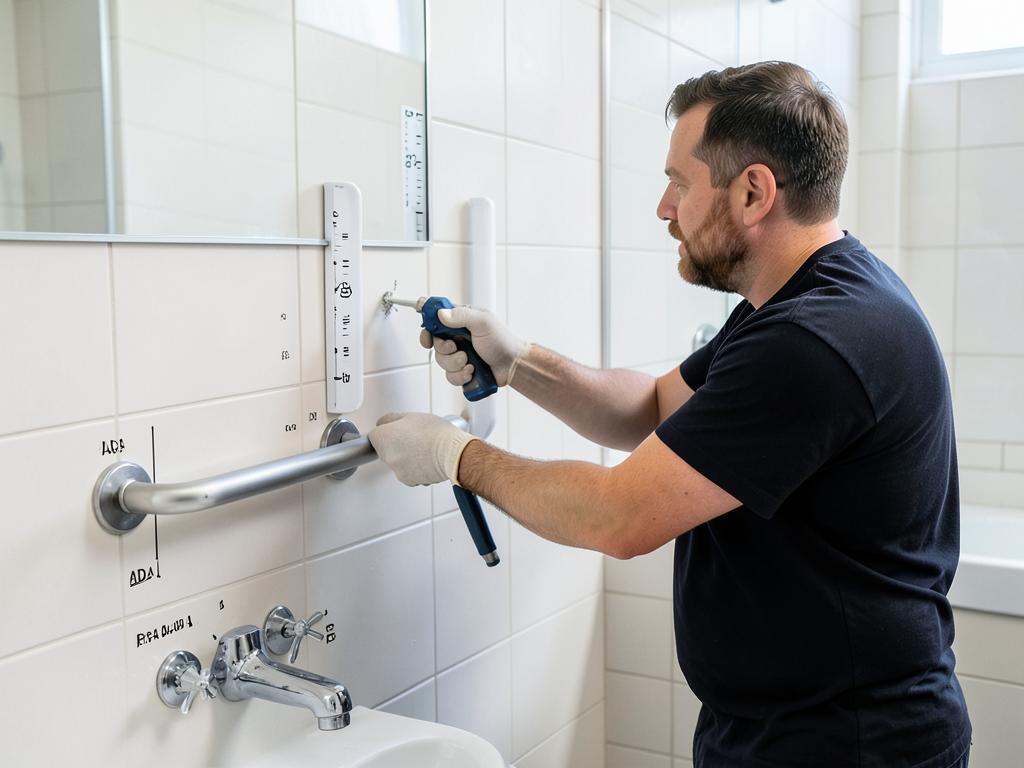
Grab Bars and Support Systems
Grab bars must support 250 pounds of force in any direction. Standard locations include:
- Rear wall of toilet: 36 inches long
- Side wall of toilet: 42 inches long
- Inside shower: vertical and horizontal bars at entry
Mount bars 33-36 inches from floor to top gripping surface. Use stainless steel or powder-coated finishes that resist corrosion in Baltimore’s humid climate.
Accessible Showers and Bathtubs
Curbless showers eliminate tripping hazards and allow direct wheelchair access. The floor must slope 1/4 inch per foot toward the drain. Install a linear drain along one wall to maximize usable space. Professional Drain Cleaning Services to Clear Stubborn Clogs in Federal Hill.
Roll-in showers need a 36-inch wide entry and 30-inch by 60-inch clear floor space inside. Handheld showerheads with 60-inch hoses mounted on adjustable slide bars provide flexibility for seated users.
Walk-in tubs with outward-swinging doors offer another option. Look for models with built-in seating, anti-scald valves, and fast-drain technology to minimize wait times.
Plumbing Modifications for ADA Compliance
Professional plumbing work ensures all modifications meet both ADA standards and Baltimore’s local codes. The right plumber understands how to work within Park Heights’ historic home structures while installing modern accessibility features. Plumbing College Park.
Valve and Faucet Requirements
Thermostatic mixing valves prevent scalding by maintaining consistent water temperature. These are required in accessible bathrooms under both ADA guidelines and Baltimore plumbing code. Fast Water Heater Replacement for Homeowners in Towson and Lutherville.
Single-lever faucets with wrist-blade handles work best for users with limited grip strength. Install them 15-48 inches from floor depending on reach range requirements.. Read more about Plumbing Requirements for Adding a Tiny Home or ADU in Baltimore County.
Water Heater Considerations
Set water heaters to 120°F maximum to prevent burns. This temperature provides adequate hot water while staying within safe limits for elderly skin. Fixing Low Water Pressure in Your Locust Point Rowhome.
Consider tankless water heaters for smaller Park Heights bathrooms. These units provide unlimited hot water without the space requirements of traditional tanks.
Emergency Shut-off Systems
Install accessible shut-off valves within reach of seated users. These should be clearly marked and easy to operate in emergencies.
Consider smart water sensors that detect leaks and automatically shut off supply lines. These prevent costly water damage in accessible bathrooms.
Maryland ADA Compliance and Local Codes
Maryland’s accessibility requirements often exceed federal ADA standards. Understanding these differences is crucial for Park Heights homeowners.
The Maryland Accessibility Code requires:
- Door hardware operable with one hand without tight grasping
- Clear floor space extending beyond door swing area
- Reinforced walls behind grab bars for future installations
Baltimore City adds specific requirements for historic districts. Homeowners in Park Heights may need additional approvals for exterior modifications visible from public ways.
COMAR 05.02.02 Section 04.04.04 specifically addresses residential accessibility modifications. This section requires permits for any work affecting structural elements or major systems.
Design Considerations for Park Heights Homes
Park Heights features a mix of architectural styles from different eras. Each presents unique challenges for ADA modifications.
Many homes have narrow hallways and small bathrooms that require creative solutions. Consider pocket doors instead of traditional swinging doors to maximize usable space.
Older homes may have cast iron drain lines that need replacement when installing new fixtures. This work should be coordinated with accessibility modifications to minimize disruption.
Water pressure in Park Heights varies by location and time of day. Install pressure-balancing valves to ensure consistent flow regardless of building demand.
Cost Factors and Timeline for ADA Bathroom Projects
ADA bathroom modifications in Park Heights typically cost $15,000-$35,000 depending on scope and existing conditions. Factors affecting cost include:
- Extent of demolition required
- Plumbing rerouting needs
- Custom fixture selections
- Permit and inspection fees
Most projects take 2-4 weeks from start to finish. This includes demolition, rough plumbing, fixture installation, and final inspections.
Maryland offers tax credits for accessibility improvements. Homeowners should consult tax professionals about available deductions for medically necessary modifications.
Common Mistakes to Avoid
Many homeowners make costly errors when attempting ADA modifications. Understanding these pitfalls can save time and money.
Installing grab bars without proper backing is a frequent mistake. These fixtures must anchor to structural members, not just drywall. Use backing boards where studs aren’t available.
Choosing fixtures based solely on appearance rather than function leads to problems. Test fixtures before purchase to ensure they meet operational requirements.
Ignoring local codes in favor of online advice causes compliance issues. Always verify requirements with Baltimore City inspectors before starting work.
Overlooking lighting needs affects usability. Install bright, even lighting with motion sensors for nighttime use. Avoid fixtures that create glare or shadows.. Read more about Why Your Ellwood Park Rowhome Needs a Dual Flush Toilet.
Working with Professional Plumbers
ADA bathroom projects require specialized knowledge beyond basic plumbing skills. Look for plumbers with experience in accessibility modifications and knowledge of local codes.
Ask potential contractors about their experience with:
- COMAR compliance
- Baltimore City permitting processes
- Historic home modifications
- Emergency shut-off systems
Request references from previous accessibility projects. Verify they carry appropriate insurance and understand liability issues related to modifications.
Professional plumbers should provide detailed written estimates including permit costs, material specifications, and project timelines. Avoid contractors who won’t put details in writing.
Maintenance and Long-term Considerations
Accessible bathrooms require specific maintenance to remain functional and safe. Establish a regular inspection schedule to catch problems early.
Check grab bar mounting hardware quarterly. Loose bars create fall hazards and should be tightened immediately.
Inspect shower door seals and tracks monthly. Replace worn components to prevent water damage and ensure smooth operation.
Test emergency shut-off valves twice yearly. These must work reliably when needed, so replace any that stick or leak. Who to Call for an Emergency Pipe Burst in Canton Right Now.
Clean fixtures with non-abrasive cleaners to preserve finishes. Avoid harsh chemicals that could damage specialized coatings or seals.
Future-Proofing Your Accessible Bathroom
Design your accessible bathroom with future needs in mind. This approach saves money and disruption if requirements change over time.
Install reinforced backing in all walls, even where grab bars aren’t immediately needed. This allows easy addition of support systems later.
Choose fixtures with adjustable features when possible. Height-adjustable showerheads and removable bases provide flexibility as needs evolve.
Plan for potential caregiver access. Include space for a second person to assist with transfers or hygiene tasks.
Consider smart home integration for lighting, ventilation, and emergency communication systems. These technologies improve safety and convenience.
Benefits Beyond Accessibility
ADA compliant bathrooms offer advantages that extend beyond accessibility needs. These improvements often increase home value and appeal to a broader market.
Universal design principles make bathrooms more functional for all users, not just those with disabilities. Lever handles, good lighting, and clear floor space benefit everyone.
Quality materials and professional installation in accessible bathrooms typically result in higher-quality construction overall. This attention to detail improves durability and appearance.
Energy-efficient fixtures and smart technology in accessible bathrooms often reduce utility costs. These savings offset some of the initial investment over time.
Peace of mind knowing your home accommodates changing needs provides significant emotional value. This security often outweighs pure financial considerations.
Getting Started with Your ADA Bathroom Project
Begin by assessing your specific needs and existing bathroom conditions. Consider current mobility limitations and potential future requirements.
Document your bathroom’s dimensions and note any structural constraints. This information helps contractors provide accurate estimates and design solutions.
Research fixture options and establish a preliminary budget. Understanding costs helps set realistic expectations and prioritize features.
Contact licensed plumbers with ADA experience for consultations. Professional input early in the process prevents costly mistakes later.
Obtain necessary permits before starting work. Baltimore City requires permits for most bathroom modifications, including accessibility upgrades.
Plan for temporary bathroom arrangements during construction. Most projects require at least partial bathroom closure for several days.
Frequently Asked Questions
Do I need a permit for ADA bathroom modifications in Park Heights?
Yes, Baltimore City requires permits for most bathroom modifications including accessibility upgrades. Work without permits can result in fines and required removal of non-compliant work.
How long do ADA bathroom projects typically take?
Most ADA bathroom projects in Park Heights take 2-4 weeks from start to finish. This includes demolition, plumbing rough-in, fixture installation, and final inspections.
Can I finance ADA bathroom modifications?
Several financing options exist including home equity loans, personal loans, and specialized accessibility improvement programs. Some Maryland programs offer low-interest loans for medically necessary modifications.
What’s the difference between ADA and universal design?
ADA focuses on minimum accessibility requirements for compliance, while universal design creates spaces usable by people of all abilities without adaptation. Universal design often exceeds ADA standards for improved functionality.
Are there tax benefits for ADA bathroom modifications?
Maryland offers tax credits for medically necessary accessibility improvements. Federal tax deductions may also apply. Consult tax professionals about specific benefits for your situation.
Conclusion
Designing an ADA compliant bathroom for aging in place in Park Heights requires careful planning, professional expertise, and attention to both federal and Maryland-specific requirements. The right modifications can provide years of safe, independent living while potentially increasing your home’s value.
Working with experienced plumbers who understand local codes and historic home structures ensures your project meets all requirements while addressing your specific needs. From proper grab bar installation to smart technology integration, professional guidance makes the difference between a compliant bathroom and one that truly enhances quality of life.
Don’t wait until mobility issues become critical. Planning ahead allows for thoughtful design and proper budgeting. Whether you’re modifying an existing bathroom or planning new construction, ADA compliance provides benefits that extend far beyond basic accessibility requirements.
Ready to create a safe, accessible bathroom in your Park Heights home? Call (443) 443-9099 today to schedule a consultation with our experienced team. We’ll assess your needs, explain your options, and provide a detailed plan for creating the perfect aging-in-place bathroom.
{
“@context”: “https://schema.org”,
“@type”: “BlogPosting”,
“headline”: “How to Design an ADA Compliant Bathroom for Aging in Place in Park Heights”,
“description”: “Learn how to create a safe ADA compliant bathroom in Park Heights with expert plumbing guidance. Discover local codes, design tips, and accessibility features.”,
“wordCount”: 1918,
“datePublished”: “2026-05-05T13:59:00.000Z”,
“dateModified”: “2026-05-05T13:59:00.000Z”,
“inLanguage”: “en-US”,
“mainEntityOfPage”: {
“@type”: “WebPage”,
“@id”: “https://keystoneplumbingbaltimore.com”
},
“publisher”: {
“@type”: “LocalBusiness”,
“name”: “Keystone Plumbing Baltimore”,
“url”: “https://keystoneplumbingbaltimore.com”
},
“author”: {
“@type”: “Organization”,
“name”: “Keystone Plumbing Baltimore”,
“url”: “https://keystoneplumbingbaltimore.com”
},
“image”: {
“@type”: “ImageObject”,
“url”: “https://keystoneplumbingbaltimore.com/wp-content/uploads/2026/03/how-to-design-an-ada-compliant-bathroom-for-aging-1.png”
}
}
{
“@context”: “https://schema.org”,
“@type”: “Plumber”,
“name”: “Keystone Plumbing Baltimore”,
“url”: “https://keystoneplumbingbaltimore.com”,
“address”: {
“@type”: “PostalAddress”,
“addressLocality”: “Baltimore”
},
“areaServed”: {
“@type”: “City”,
“name”: “Baltimore”
}
}
{
“@context”: “https://schema.org”,
“@type”: “FAQPage”,
“mainEntity”: [
{
“@type”: “Question”,
“name”: “Do I need a permit for ADA bathroom modifications in Park Heights?”,
“acceptedAnswer”: {
“@type”: “Answer”,
“text”: “Yes, Baltimore City requires permits for most bathroom modifications including accessibility upgrades. Work without permits can result in fines and required removal of non-compliant work.”
}
},
{
“@type”: “Question”,
“name”: “How long do ADA bathroom projects typically take?”,
“acceptedAnswer”: {
“@type”: “Answer”,
“text”: “Most ADA bathroom projects in Park Heights take 2-4 weeks from start to finish. This includes demolition, plumbing rough-in, fixture installation, and final inspections.”
}
},
{
“@type”: “Question”,
“name”: “Can I finance ADA bathroom modifications?”,
“acceptedAnswer”: {
“@type”: “Answer”,
“text”: “Several financing options exist including home equity loans, personal loans, and specialized accessibility improvement programs. Some Maryland programs offer low-interest loans for medically necessary modifications.”
}
},
{
“@type”: “Question”,
“name”: “What’s the difference between ADA and universal design?”,
“acceptedAnswer”: {
“@type”: “Answer”,
“text”: “ADA focuses on minimum accessibility requirements for compliance, while universal design creates spaces usable by people of all abilities without adaptation. Universal design often exceeds ADA standards for improved functionality.”
}
},
{
“@type”: “Question”,
“name”: “Are there tax benefits for ADA bathroom modifications?”,
“acceptedAnswer”: {
“@type”: “Answer”,
“text”: “Maryland offers tax credits for medically necessary accessibility improvements. Federal tax deductions may also apply. Consult tax professionals about specific benefits for your situation.”
}
}
]
}
{
“@context”: “https://schema.org”,
“@type”: “BreadcrumbList”,
“itemListElement”: [
{
“@type”: “ListItem”,
“position”: 1,
“name”: “Home”,
“item”: “https://keystoneplumbingbaltimore.com”
},
{
“@type”: “ListItem”,
“position”: 2,
“name”: “Blog”,
“item”: “https://keystoneplumbingbaltimore.com/blog”
},
{
“@type”: “ListItem”,
“position”: 3,
“name”: “How to Design an ADA Compliant Bathroom for Aging in Place in Park Heights”
}
]
}
{
“@context”: “https://schema.org”,
“@type”: “Service”,
“serviceType”: “Plumbing”,
“provider”: {
“@type”: “LocalBusiness”,
“name”: “Keystone Plumbing Baltimore”,
“url”: “https://keystoneplumbingbaltimore.com”
},
“areaServed”: {
“@type”: “City”,
“name”: “Baltimore”
},
“description”: “Learn how to create a safe ADA compliant bathroom in Park Heights with expert plumbing guidance. Discover local codes, design tips, and accessibility features.”
}