
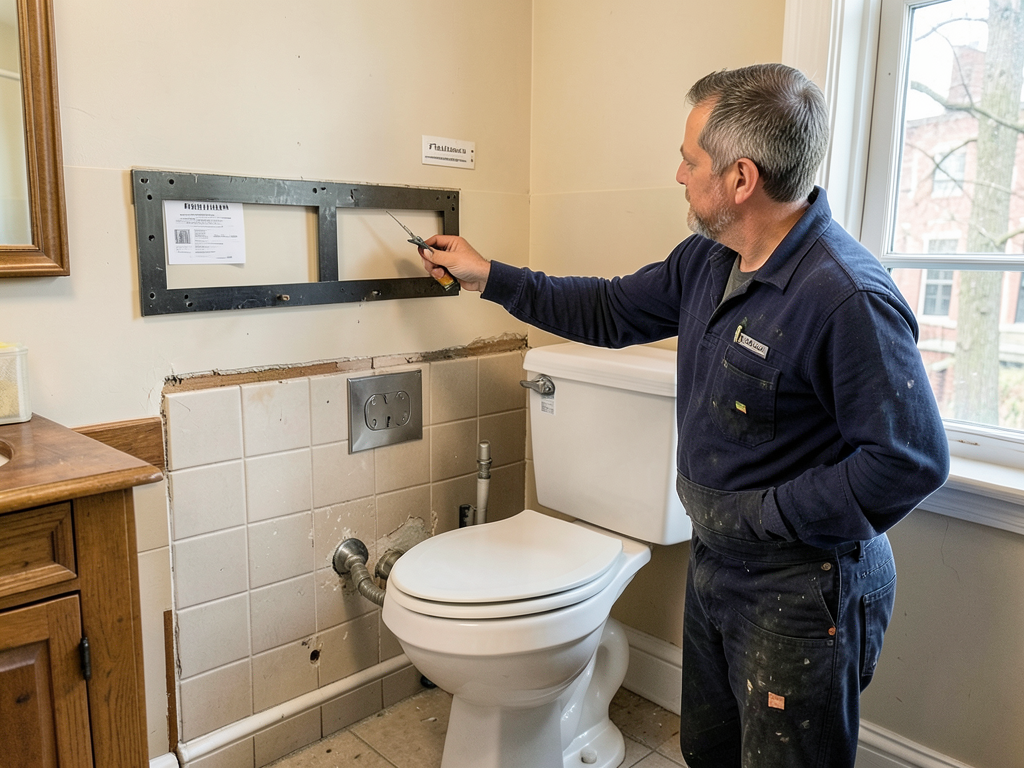
Wall-Hung vs Floor-Mounted Toilets for Your Small Bathroom in Fells Point
Choosing between a wall-hung and floor-mounted toilet for your Fells Point rowhome bathroom comes down to space, plumbing access, and your home’s historic structure. Wall-mounted units save up to 12 inches of floor space but require in-wall carrier systems that may not work in 19th-century Baltimore plumbing. Floor-mounted toilets offer simpler installation and lower upfront costs but project farther into tight spaces. Your decision impacts both daily comfort and potential property value in Baltimore’s competitive historic housing market. Baltimore City Historic Preservation Guidelines.
Why Toilet Choice Matters in Fells Point Rowhomes
Fells Point rowhomes built before 1900 feature narrow bathroom footprints averaging 5×7 feet. Original plumbing often runs through shared party walls with cast iron stacks that limit modern fixture placement. Wall-hung toilets mount to a steel carrier frame inside the wall, creating usable floor space underneath for cleaning or small storage. Floor-mounted units install directly to the flange and floor, requiring no wall modifications but occupying valuable square footage in already cramped quarters. Plumbing College Park.
Local water pressure in Fells Point varies between 40-60 PSI depending on your block’s elevation relative to the Jones Falls sewer main. This affects flushing performance regardless of toilet type. Historic homes may have lead bends or galvanized supply lines that complicate installation of modern fixtures requiring specific pressure ranges. Fast Water Heater Replacement for Homeowners in Towson and Lutherville.
Space-Saving Benefits of Wall-Mounted Toilets
Wall-hung toilets eliminate the visible tank and base, freeing up floor space for movement. The bowl typically projects only 15-18 inches from the wall versus 28-30 inches for standard floor models. This difference proves critical in Fells Point bathrooms where door swing clearance often measures less than 24 inches.
Installation requires cutting into the wall to mount a carrier frame rated for 500+ pounds. Baltimore plumbing code mandates steel carriers for wall-mounted fixtures in residential settings per Baltimore City Plumbing Code Section 405.3. The in-wall tank connects to your supply line through a concealed valve system.. Read more about Can Your Historic Bolton Hill Plumbing Handle a Modern Rainfall Showerhead?.
Cleaning becomes easier with open floor space underneath. You can mop directly under the bowl without maneuvering around pedestal bases. However, wall-mounted units typically cost $400-800 more than comparable floor models once you factor in carrier hardware and potential wall reinforcement.
Floor-Mounted Toilet Advantages for Historic Homes
Traditional floor-mounted toilets install in hours versus days for wall-hung models. No wall demolition means less dust and disruption in your living space. Baltimore’s historic preservation guidelines often favor minimal wall modifications in registered districts.
Floor models work with existing 12-inch rough-in plumbing common in Fells Point rowhomes. You can swap units without moving supply lines or drain connections. Many floor-mounted options now feature compact elongated bowls that provide comfort while reducing depth to 25-27 inches. Professional Drain Cleaning Services to Clear Stubborn Clogs in Federal Hill.
Cost savings prove significant. A quality floor-mounted toilet with WaterSense certification runs $200-400 installed. Wall-hung installations with carrier frames and potential structural reinforcement often exceed $1,200 total. Fixing Low Water Pressure in Your Locust Point Rowhome.
Technical Comparison: Wall-Hung vs Floor-Mounted
| Feature | Wall-Hung | Floor-Mounted |
|---|---|---|
| Floor Space Saved | 10-12 inches | 0 inches |
| Installation Time | 6-8 hours | 2-3 hours |
| Wall Modification Required | Yes (12-18 inch cutout) | No |
| Weight Capacity | 500+ pounds (with carrier) | 300-350 pounds |
| Repair Access | Requires wall access | Direct access |
| Cost Range (installed) | $1,200-2,500 | $400-900 |
Installation Challenges in Fells Point’s Historic Plumbing
Fells Point’s 19th-century construction presents unique obstacles. Many homes retain original cast iron stacks that connect to the Jones Falls sewer system. These pipes often measure 3-4 inches in diameter versus modern 4-inch standards, limiting simultaneous fixture operation. Trenchless Sewer Line Repair for Historic Homes in Roland Park.
Wall-hung installations require verifying wall cavity dimensions. Balloon framing common in rowhomes creates 2×4 stud spaces that may not accommodate modern carrier frames. You might need to sister studs or install blocking between existing framing members.
Water hammer arrestors become essential when upgrading to modern flush valves. Baltimore’s aging municipal water mains cause pressure fluctuations that can damage pressure-assisted toilets. Installing hammer arrestors on both hot and cold supplies prevents pipe banging and valve damage.
Lead service lines in some Fells Point homes require special handling. Maryland’s Lead and Copper Rule compliance means testing water quality before installing new fixtures. Homes built before 1986 may need lead-free certification for all replacement plumbing components.. Read more about How to Soundproof Your Plumbing During a Rowhome Renovation in Fells Point.
Cost Analysis: What to Expect in 2026
Wall-hung toilet installations in Fells Point typically break down as follows:
- Carrier frame and in-wall tank assembly: $350-500
- Wall demolition and patching: $200-400
- Structural reinforcement if needed: $300-600
- Premium wall-mounted toilet bowl: $400-800
- Permit fees (Baltimore City): $75-150
- Total: $1,525-2,450
Floor-mounted installations cost significantly less:
- Standard floor toilet: $150-400
- Installation labor: $150-300
- Wax ring and supplies: $25-50
- Permit fees: $50-100
- Total: $375-850
WaterSense-certified models qualify for Baltimore City Department of Public Works rebates up to $50 per fixture. Check current year rebate programs as funding availability changes annually. EPA WaterSense Certification.
Making the Right Choice for Your Space
Choose wall-mounted if you need maximum floor space and plan to stay in your home long-term. The investment pays off in daily usability and potential resale appeal. However, verify your wall structure can support the carrier system before committing.
Floor-mounted toilets work best when budget constraints exist or when preserving original wall finishes matters. Modern compact elongated models offer excellent comfort without requiring structural modifications.
Consider your bathroom’s specific dimensions. Measure from the back wall to the center of your current toilet flange. This rough-in measurement determines which models fit without moving plumbing. Most Fells Point rowhomes use 12-inch rough-ins, but some older units measure 10 inches.
Water pressure testing helps predict performance. Homes below Pratt Street often experience lower pressure due to elevation changes. Wall-hung units with concealed tanks may struggle with inadequate supply pressure, causing incomplete flushes.
Installation Timeline and What to Expect
Wall-mounted installations span 2-3 days minimum. Day one involves removing the old toilet, cutting wall openings, and mounting the carrier frame. Day two allows for wall patching and painting if needed. Day three completes final connections and testing.
Floor-mounted swaps finish in a single day. The process includes removing the old unit, checking flange condition, installing the new bowl and tank, and testing for leaks. Most installations complete within 4-6 hours.
Both options require 24-hour curing time for caulk and sealants before heavy use. Plan alternative bathroom arrangements during installation, especially for wall-mounted projects requiring multiple tradespeople.
Maintenance Considerations
Wall-hung toilets hide most serviceable components inside the wall. When issues arise, accessing the concealed tank requires removing wall panels or cutting access holes. Keep spare access panels in mind during installation for future maintenance.
Floor-mounted units provide direct access to all components. You can replace flappers, fill valves, and handles without wall demolition. This accessibility reduces long-term maintenance costs and simplifies DIY repairs.
Both types benefit from annual inspections. Check for water supply line leaks, verify proper bowl mounting, and test flush valve operation. Baltimore’s hard water can cause mineral buildup affecting both toilet types over time.
Frequently Asked Questions
Can I install a wall-mounted toilet in my 100-year-old Fells Point rowhome?
Possibly, but structural assessment comes first. Many historic walls use 2×3 or 2×4 studs on 24-inch centers that may not support modern carrier frames. A structural engineer should evaluate your specific wall cavity dimensions before proceeding.
Will a wall-hung toilet work with my existing plumbing?
Wall-mounted units require specific carrier frames and concealed tanks. Your existing supply line might need relocation or extension. The drain connection typically remains in the same position, but the new fixture’s rough-in must match your current plumbing layout.
How much floor space do I actually save with a wall-mounted toilet?
Wall-hung models project 10-12 inches less from the wall than floor-mounted units. In a typical 5×7 foot bathroom, this translates to 5-7 square feet of additional usable floor space. The difference becomes noticeable when opening doors or moving past the toilet.
Are wall-mounted toilets more prone to leaks?
Both types can leak if improperly installed. Wall-mounted units hide potential leaks inside wall cavities longer than floor models. However, quality installation with proper sealing and pressure testing prevents most leak issues regardless of toilet type.
Do I need a permit to replace my toilet in Baltimore City?
Baltimore City requires permits for toilet replacements when moving fixtures or changing plumbing connections. Simple swap-outs of identical models may not need permits, but wall-mounted installations always require permits and inspections per Baltimore City Plumbing Code Section 105.1.
How do I know if my water pressure is sufficient for a modern toilet?
Test your home’s water pressure with a gauge attached to an outdoor spigot. Readings between 40-80 PSI work for most toilets. Readings below 40 PSI may cause weak flushes in pressure-assisted models. Baltimore’s municipal system typically provides 45-65 PSI in Fells Point, but individual buildings vary.
What’s the warranty difference between toilet types?
Premium floor-mounted toilets often include 5-10 year warranties on tanks and bowls. Wall-mounted units typically offer 1-5 year warranties covering the carrier frame and concealed tank. Always verify warranty terms cover both parts and labor for your specific model.
Ready to Upgrade Your Fells Point Bathroom?
Wall-hung and floor-mounted toilets each offer distinct advantages for small Baltimore bathrooms. Your choice depends on available space, budget, and your home’s structural characteristics. Professional assessment ensures you select the right option for your specific situation.
Call (443) 443-9099 today to schedule your bathroom toilet consultation. Our Baltimore plumbing experts understand the unique challenges of historic Fells Point rowhomes and can recommend the perfect solution for your space and budget.
Don’t let a cramped bathroom limit your comfort. Whether you need a space-saving wall-mounted unit or a reliable floor-mounted model, we’ll handle everything from assessment to final installation. Our team knows Baltimore’s plumbing codes and historic building requirements inside and out.
Pick up the phone and call (443) 443-9099 before the next storm hits. We’ll help you maximize your bathroom space while ensuring code compliance and long-term reliability. Your Fells Point home deserves expert plumbing care from professionals who understand local conditions.
{
“@context”: “https://schema.org”,
“@type”: “BlogPosting”,
“headline”: “Wall-Hung vs Floor-Mounted Toilets for Your Small Bathroom in Fells Point”,
“description”: “Discover which toilet type maximizes space in your Fells Point rowhome bathroom. Compare wall-hung and floor-mounted options with local installation insights.”,
“wordCount”: 1689,
“datePublished”: “2026-05-30T15:28:00.000Z”,
“dateModified”: “2026-05-30T15:28:00.000Z”,
“inLanguage”: “en-US”,
“mainEntityOfPage”: {
“@type”: “WebPage”,
“@id”: “https://keystoneplumbingbaltimore.com”
},
“publisher”: {
“@type”: “LocalBusiness”,
“name”: “Keystone Plumbing Baltimore”,
“url”: “https://keystoneplumbingbaltimore.com”
},
“author”: {
“@type”: “Organization”,
“name”: “Keystone Plumbing Baltimore”,
“url”: “https://keystoneplumbingbaltimore.com”
},
“image”: {
“@type”: “ImageObject”,
“url”: “https://keystoneplumbingbaltimore.com/wp-content/uploads/2026/03/wall-hung-vs-floor-mounted-toilets-for-your-small-1.png”
}
}
{
“@context”: “https://schema.org”,
“@type”: “Plumber”,
“name”: “Keystone Plumbing Baltimore”,
“url”: “https://keystoneplumbingbaltimore.com”,
“address”: {
“@type”: “PostalAddress”,
“addressLocality”: “Baltimore”
},
“areaServed”: {
“@type”: “City”,
“name”: “Baltimore”
}
}
{
“@context”: “https://schema.org”,
“@type”: “FAQPage”,
“mainEntity”: [
{
“@type”: “Question”,
“name”: “Can I install a wall-mounted toilet in my 100-year-old Fells Point rowhome?”,
“acceptedAnswer”: {
“@type”: “Answer”,
“text”: “Possibly, but structural assessment comes first. Many historic walls use 2×3 or 2×4 studs on 24-inch centers that may not support modern carrier frames. A structural engineer should evaluate your specific wall cavity dimensions before proceeding.”
}
},
{
“@type”: “Question”,
“name”: “Will a wall-hung toilet work with my existing plumbing?”,
“acceptedAnswer”: {
“@type”: “Answer”,
“text”: “Wall-mounted units require specific carrier frames and concealed tanks. Your existing supply line might need relocation or extension. The drain connection typically remains in the same position, but the new fixture’s rough-in must match your current plumbing layout.”
}
},
{
“@type”: “Question”,
“name”: “How much floor space do I actually save with a wall-mounted toilet?”,
“acceptedAnswer”: {
“@type”: “Answer”,
“text”: “Wall-hung models project 10-12 inches less from the wall than floor-mounted units. In a typical 5×7 foot bathroom, this translates to 5-7 square feet of additional usable floor space. The difference becomes noticeable when opening doors or moving past the toilet.”
}
},
{
“@type”: “Question”,
“name”: “Are wall-mounted toilets more prone to leaks?”,
“acceptedAnswer”: {
“@type”: “Answer”,
“text”: “Both types can leak if improperly installed. Wall-mounted units hide potential leaks inside wall cavities longer than floor models. However, quality installation with proper sealing and pressure testing prevents most leak issues regardless of toilet type.”
}
},
{
“@type”: “Question”,
“name”: “Do I need a permit to replace my toilet in Baltimore City?”,
“acceptedAnswer”: {
“@type”: “Answer”,
“text”: “Baltimore City requires permits for toilet replacements when moving fixtures or changing plumbing connections. Simple swap-outs of identical models may not need permits, but wall-mounted installations always require permits and inspections per Baltimore City Plumbing Code Section 105.1.”
}
},
{
“@type”: “Question”,
“name”: “How do I know if my water pressure is sufficient for a modern toilet?”,
“acceptedAnswer”: {
“@type”: “Answer”,
“text”: “Test your home’s water pressure with a gauge attached to an outdoor spigot. Readings between 40-80 PSI work for most toilets. Readings below 40 PSI may cause weak flushes in pressure-assisted models. Baltimore’s municipal system typically provides 45-65 PSI in Fells Point, but individual buildings vary.”
}
},
{
“@type”: “Question”,
“name”: “What’s the warranty difference between toilet types?”,
“acceptedAnswer”: {
“@type”: “Answer”,
“text”: “Premium floor-mounted toilets often include 5-10 year warranties on tanks and bowls. Wall-mounted units typically offer 1-5 year warranties covering the carrier frame and concealed tank. Always verify warranty terms cover both parts and labor for your specific model.”
}
},
{
“@type”: “Question”,
“name”: “Ready to Upgrade Your Fells Point Bathroom?”,
“acceptedAnswer”: {
“@type”: “Answer”,
“text”: “Wall-hung and floor-mounted toilets each offer distinct advantages for small Baltimore bathrooms. Your choice depends on available space, budget, and your home’s structural characteristics. Professional assessment ensures you select the right option for your specific situation.”
}
}
]
}
{
“@context”: “https://schema.org”,
“@type”: “BreadcrumbList”,
“itemListElement”: [
{
“@type”: “ListItem”,
“position”: 1,
“name”: “Home”,
“item”: “https://keystoneplumbingbaltimore.com”
},
{
“@type”: “ListItem”,
“position”: 2,
“name”: “Blog”,
“item”: “https://keystoneplumbingbaltimore.com/blog”
},
{
“@type”: “ListItem”,
“position”: 3,
“name”: “Wall-Hung vs Floor-Mounted Toilets for Your Small Bathroom in Fells Point”
}
]
}
{
“@context”: “https://schema.org”,
“@type”: “Service”,
“serviceType”: “Plumbing”,
“provider”: {
“@type”: “LocalBusiness”,
“name”: “Keystone Plumbing Baltimore”,
“url”: “https://keystoneplumbingbaltimore.com”
},
“areaServed”: {
“@type”: “City”,
“name”: “Baltimore”
},
“description”: “Discover which toilet type maximizes space in your Fells Point rowhome bathroom. Compare wall-hung and floor-mounted options with local installation insights.”
}