
Protecting Your Upper Floor Laundry Room from Water Damage in Brewers Hill
Upper floor laundry rooms in Brewers Hill rowhomes and condos create a unique risk. A single burst hose can send hundreds of gallons cascading through your floors, destroying ceilings, drywall, and personal belongings below. The combination of Baltimore’s aging infrastructure, seasonal freeze-thaw cycles, and the vibration from high-efficiency washers makes these spaces particularly vulnerable to catastrophic water damage. Who to Call for an Emergency Pipe Burst in Canton Right Now.
Upper floor laundry rooms require specialized protection strategies that address both the mechanical stress on components and the structural consequences of failure. The typical rubber supply hoses degrade faster in Baltimore’s hard water conditions, while improper drain connections can create slow leaks that go unnoticed until major damage occurs. Understanding these specific vulnerabilities is the first step toward preventing a disaster. Fast Water Heater Replacement for Homeowners in Towson and Lutherville.
Common Causes of Upper Floor Laundry Room Leaks
Most upper floor laundry room failures follow predictable patterns that experienced Baltimore plumbers recognize immediately. The primary culprits include deteriorated supply hoses, loose drain connections, and improper machine leveling. Each failure mode creates distinct warning signs that homeowners can learn to identify before catastrophic damage occurs. Professional Drain Cleaning Services to Clear Stubborn Clogs in Federal Hill.
Supply hose degradation represents the most frequent failure point in Baltimore homes. The city’s water contains higher mineral content than surrounding areas, accelerating rubber hose breakdown from the inside out. These hoses typically fail within 3-5 years, often during the spin cycle when water pressure peaks and machine vibration is greatest. The failure usually sounds like a sudden pop followed by rushing water, giving homeowners only seconds to react. Fixing Low Water Pressure in Your Locust Point Rowhome.
Drain connection failures create a different type of risk. The standpipe connection where the washing machine drain hose enters the wall plumbing can loosen over time, especially in older Brewers Hill buildings where wall cavities lack modern moisture barriers. These leaks often start as slow drips that evaporate before detection, gradually saturating wall studs and floor joists until structural damage becomes apparent.
Machine leveling issues compound both supply and drain risks. An unlevel washer creates excessive vibration that stresses all connection points. The vibration also causes the machine to “walk” during spin cycles, potentially pulling hoses loose or cracking drain fittings. Proper leveling requires both side-to-side and front-to-back adjustment, not just visual inspection.
Upgrading to Braided Stainless Steel Hoses
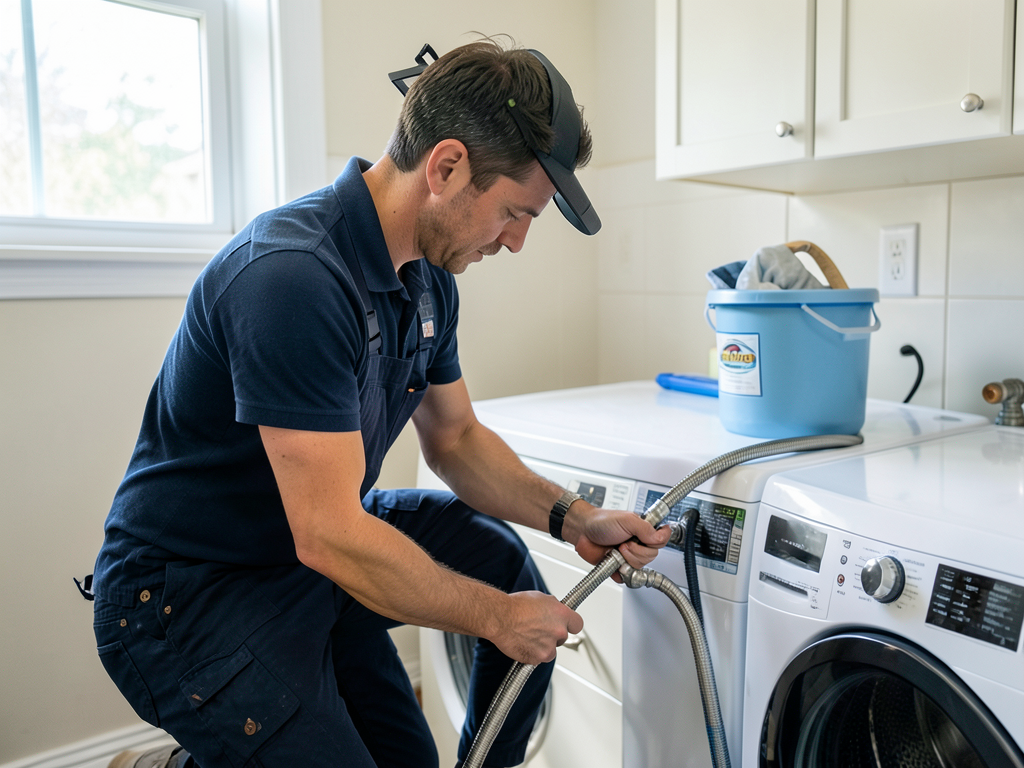
Replacing standard rubber hoses with braided stainless steel represents the single most effective prevention upgrade for upper floor laundry rooms. These reinforced hoses withstand higher pressures, resist kinking, and last significantly longer than their rubber counterparts. The braided exterior contains a burst even if the inner lining fails, providing crucial containment time.. Read more about Signs Your Water Pressure Regulator is Failing in Your Nottingham Home.
The construction difference matters significantly. Standard rubber hoses use a single rubber tube wrapped in cloth, while braided stainless hoses feature a rubber inner tube surrounded by stainless steel wire mesh, then covered with a protective PVC coating. This multi-layer design handles pressures up to 1,500 PSI compared to rubber’s typical 800 PSI rating.
| Feature | Rubber Hoses | Braided Stainless Steel |
|---|---|---|
| Typical Lifespan | 3-5 years | 10+ years |
| Burst Pressure | 800 PSI | 1,500+ PSI |
| Cost per Hose | $5-10 | $20-30 |
| Leak Containment | No containment | Outer braid contains burst |
| Freeze Resistance | Poor | Excellent |
Installation requires proper torque specification. Over-tightening creates stress cracks in the brass fittings, while under-tightening allows slow leaks. The correct approach involves hand-tightening until resistance is felt, then using a wrench for exactly one additional quarter turn. This provides a watertight seal without stressing the fittings.. Read more about Installing a Smart Water Shutoff Valve to Protect Your Medfield Property.
Installing Automatic Water Shut-Off Valves
Automatic shut-off valves provide the ultimate protection against catastrophic upper floor laundry room flooding. These systems detect leaks through either moisture sensors or flow monitoring, then automatically close the water supply within seconds of detecting a problem. The technology has advanced significantly, with modern systems offering smartphone alerts and integration with home automation platforms.
Moisture-based systems use water-sensing cables or pads placed under and around the washing machine. When water contacts these sensors, an electronic valve immediately shuts off both hot and cold water supplies. These systems respond to any moisture source, including slow drips that might not trigger a flow-based system.
Flow-based systems monitor water usage patterns and shut off supply when abnormal flow rates or durations are detected. These systems can distinguish between normal washing machine operation and a burst hose, providing protection without false alarms. However, they may not detect very slow leaks that don’t significantly alter flow patterns.
Installation complexity varies by system type. Basic moisture sensor systems connect directly to existing supply lines and require only basic plumbing skills. More sophisticated flow-based systems often require professional installation to integrate with home plumbing and electrical systems. The investment typically ranges from $150-400 for consumer-grade systems to $800-1,500 for professional-grade installations.
Proper Drainage and Floor Pan Requirements
Upper floor laundry rooms must include proper drainage infrastructure to handle both normal operation and potential failures. Baltimore plumbing code requires a floor drain in any laundry room located above the first floor, with specific requirements for trap size and vent connection. The drain must be positioned to capture water from a 5-foot radius around the washing machine.
Floor pans provide an additional layer of protection by containing leaks before they reach finished surfaces below. A properly sized pan should extend at least 4 inches beyond all sides of the washing machine and include a drain connection to the building’s plumbing system. The pan material must be corrosion-resistant and capable of supporting the machine’s weight plus water volume.
Standpipe installation requires specific dimensions to prevent both siphoning and overflow. The standpipe must extend 18-30 inches above the trap weir, with a minimum diameter of 2 inches for washing machine drains. The trap arm cannot exceed 5 feet in length, and the entire assembly must maintain a minimum slope of 1/4 inch per foot toward the drain. ASSE International.
Vent connections prevent air pressure buildup that can slow drainage and cause trap seal loss. The vent must connect within 6 feet of the trap, with a minimum diameter of 1.5 inches for washing machine drains. Improper venting creates gurgling sounds during drainage and can eventually lead to complete trap seal loss, allowing sewer gases to enter the living space. Trenchless Sewer Line Repair for Historic Homes in Roland Park.
Water Pressure Regulation for Baltimore Homes
Baltimore’s municipal water system experiences significant pressure fluctuations that directly impact laundry room component longevity. Pressure typically ranges from 40-80 PSI but can spike above 100 PSI during system maintenance or fire hydrant use. These spikes create stress on hoses, valves, and connection points that accelerates wear and increases failure risk.
Water pressure regulators installed at the building’s main supply line provide the most effective protection against pressure-related failures. These devices maintain consistent pressure regardless of municipal supply variations, typically limiting pressure to 60-70 PSI for residential applications. The regulator includes an adjustment screw and pressure gauge for monitoring and fine-tuning.
Pressure testing reveals system vulnerabilities that might otherwise go unnoticed. A simple test involves attaching a pressure gauge to an outdoor spigot and monitoring pressure over 24 hours. Spikes above 80 PSI indicate the need for regulator installation or adjustment. Some Baltimore neighborhoods consistently experience higher pressures due to proximity to pumping stations or elevation changes.. Read more about The Right Way to Winterize Your Outdoor Plumbing in Poplar Hill.
Expansion tanks installed on the cold water supply line absorb pressure increases caused by water heater thermal expansion. Without these tanks, pressure can build to dangerous levels when no fixtures are open to relieve it. The tank contains a rubber bladder that compresses as pressure increases, then expands to maintain stable system pressure.
Hard Water Impact on Laundry Room Components
Baltimore’s water hardness, typically 8-12 grains per gallon, creates specific challenges for laundry room equipment. Mineral deposits accumulate inside hoses, valves, and connection points, restricting flow and creating pressure points that accelerate failure. The deposits also interfere with rubber seal flexibility, causing premature aging and cracking.
Water heater sediment from hard water minerals can travel through supply lines and accumulate in washing machine valves. This sediment causes valves to stick in partially open positions, creating slow leaks that worsen over time. The problem becomes more severe in upper floor installations where gravity cannot assist in draining trapped sediment.
Cleaning and maintenance frequency must increase in hard water areas. Supply hose screens should be checked quarterly for mineral buildup, and aerators on nearby fixtures should be cleaned regularly to prevent backflow contamination. Some homeowners install whole-house water softeners specifically to protect laundry room equipment from hard water damage.
Detergent interaction with hard water creates additional complications. Minerals combine with detergent to form soap scum that can accumulate in drain lines and standpipes. This accumulation narrows pipe diameters over time, increasing the likelihood of slow drainage and overflow during high-volume wash cycles.. Read more about The Strange Reason Your Pipes Bang and Clatter in Dickeyville.
Proper Machine Leveling and Vibration Control
Correct washing machine leveling prevents the vibration that causes connection failures and accelerates component wear. The machine must be level in both directions, with all four feet firmly contacting the floor surface. Many modern washers include self-leveling rear feet, but the front feet require manual adjustment using a bubble level.
Vibration isolation pads reduce the transmission of machine movement to surrounding structures. These pads, typically made of rubber or neoprene, absorb vibration before it can loosen connections or cause the machine to “walk” during spin cycles. The pads also protect flooring from scuff marks and reduce noise transmission to adjacent rooms.
Floor strength requirements become critical for upper floor installations. The floor must support the machine’s weight plus water weight during operation, typically 200-300 pounds for standard washers. Older Baltimore buildings may require additional floor reinforcement before installing laundry equipment on upper levels.
Anti-tip brackets provide additional stability by securing the machine to the wall or floor. These brackets prevent tipping during loading and unloading, which can stress water connections and drain fittings. The brackets are particularly important in homes with children or in earthquake-prone areas.
Maryland Plumbing Code Requirements for Laundry Rooms
Maryland plumbing code establishes specific requirements for laundry room installations that protect both property and public health. COMAR 26.04.01.03 requires floor drains in all laundry rooms located above grade, with specific trap and vent sizing requirements. The code also mandates accessible shut-off valves for both hot and cold supplies.
Overflow protection requirements vary by building type and laundry room location. Multi-family buildings must include secondary containment for upper floor laundry rooms, typically in the form of floor pans with integrated drains. Single-family homes have more flexibility but must still provide adequate drainage for potential leaks.
Backflow prevention devices prevent contaminated water from entering the potable water supply during pressure drops or back-siphonage events. These devices, typically installed on the cold water supply line, are required by Maryland code for all washing machine connections. The devices must be testable and certified to meet ASSE 1024 standards.
Ventilation requirements ensure proper air circulation around the washing machine, preventing moisture accumulation that can lead to mold growth. The code requires either operable windows or mechanical ventilation capable of providing 5 air changes per hour in laundry rooms without exterior walls.
Professional Maintenance Inspection Checklist
Regular professional inspections identify potential failures before they cause damage. A comprehensive inspection should occur annually for upper floor laundry rooms, with specific attention to connection integrity, valve function, and drainage system performance. The inspection process follows a systematic approach that examines every component that could fail.
Supply line inspection involves checking both visual condition and functional integrity. Technicians examine hose exterior for cracks, bulges, or corrosion, then test connection tightness using a torque wrench to ensure proper specifications. They also check valve seat condition and handle operation, looking for signs of mineral buildup or wear.
Drain system inspection focuses on standpipe integrity, trap function, and vent performance. Technicians use specialized cameras to examine inside drain lines for buildup or damage, then test trap seal depth using smoke testing to verify proper function. They also check vent connections for obstructions that could cause drainage problems.
Machine mounting and leveling verification ensures the washer operates without excessive vibration. Technicians use precision levels to check machine orientation, then test spin cycle operation to verify vibration remains within acceptable limits. They also inspect anti-vibration pads for wear and replace them if compression exceeds specifications.
Water pressure testing identifies system vulnerabilities that could lead to component failure. Technicians connect pressure gauges to multiple points in the system, monitoring for spikes during typical usage patterns. They also test pressure regulator function and expansion tank pre-charge pressure to ensure proper system protection.
When to Call a Professional Plumber
Certain laundry room issues require professional expertise to prevent further damage or ensure code compliance. Supply line replacement involving soldered connections, drain line modifications, or pressure regulator installation all require licensed plumber involvement. Attempting these tasks without proper training risks creating larger problems than the original issue.
Water damage indicators signal the need for immediate professional attention. Water stains on ceilings below laundry rooms, musty odors in adjacent rooms, or unexplained increases in water bills all suggest active leaks requiring professional diagnosis. The source of these leaks often lies within wall cavities or floor assemblies, requiring specialized detection equipment.
Installation of automatic shut-off systems involves both plumbing and electrical work that exceeds typical homeowner capabilities. These systems require proper valve selection, wiring connections, and integration with existing plumbing infrastructure. Professional installation ensures the system functions correctly when needed most.
Code compliance issues arise when modifying existing laundry room installations. Baltimore’s building code contains specific requirements for upper floor laundry rooms that may not be obvious to homeowners. Professional plumbers understand these requirements and can ensure modifications meet all applicable standards.
Insurance Considerations for Upper Floor Laundry Rooms
Home insurance policies often contain specific provisions regarding upper floor laundry room installations. Some policies require automatic shut-off valves or floor drains as conditions for coverage, while others may exclude damage from certain types of failures. Understanding these provisions helps homeowners make informed decisions about protection investments.
Documentation of preventive measures can support insurance claims and potentially reduce premiums. Installing braided stainless hoses, automatic shut-off valves, and proper drainage systems demonstrates responsible homeownership that insurers view favorably. Some insurance companies offer premium discounts for homes with comprehensive water leak protection systems.
Claim procedures for upper floor laundry room failures typically require immediate mitigation to prevent further damage. Homeowners should know the location of main water shut-off valves and have emergency contact information readily available. Quick response can mean the difference between a simple repair and major reconstruction. EPA WaterSense.
Secondary damage from upper floor laundry room failures often exceeds the initial water damage. Water traveling through floor assemblies can damage electrical systems, create mold growth in wall cavities, and compromise structural integrity. Professional assessment of all affected areas ensures complete restoration and prevents future problems.
Winterization for Upper Floor Laundry Rooms
Baltimore’s winter temperatures create specific risks for upper floor laundry rooms, particularly in homes with marginal insulation or exposed plumbing. Supply lines in exterior walls or unheated utility rooms can freeze when temperatures drop below 20°F, causing pipes to burst when thawing occurs.
Freeze protection strategies include pipe insulation, heat tape installation, and maintaining minimum space temperatures. Foam pipe insulation provides basic protection for exposed supply lines, while thermostatically controlled heat tape offers more reliable freeze prevention in vulnerable areas. The heat tape must be installed according to manufacturer specifications to prevent fire hazards.
Temperature monitoring helps prevent freeze damage by alerting homeowners to dangerous conditions. Smart thermostats and temperature sensors can send alerts when room temperatures approach freezing, allowing intervention before damage occurs. Some systems automatically shut off water supply when temperatures drop below safe levels.
Drain line freeze prevention requires different strategies than supply lines. Standing water in drain traps can freeze and break the trap, while ice formation in standpipes can cause backups and overflow. Pouring environmentally safe antifreeze into traps before extended absences provides protection against freezing damage.
Smart Technology Integration for Leak Prevention
Modern smart home technology offers advanced leak detection and prevention capabilities that integrate with upper floor laundry room protection systems. These systems combine moisture sensors, flow monitors, and automated shut-off valves with smartphone apps that provide real-time monitoring and control from anywhere.
Whole-home water monitoring systems track usage patterns across all fixtures, learning normal consumption patterns and alerting homeowners to anomalies that might indicate leaks. These systems can distinguish between normal washing machine operation and supply line failures, providing protection without unnecessary interruptions.
Integration with home automation platforms allows coordinated responses to leak detection. When a laundry room sensor detects water, the system can automatically shut off the main water supply, send alerts to all household members, and notify emergency contacts. Some systems integrate with security systems to provide comprehensive property protection.
Remote monitoring capabilities provide peace of mind for homeowners who travel frequently or own rental properties. Smartphone apps display real-time system status, allow manual valve control, and provide historical usage data that can identify developing problems before they cause damage. Some systems include battery backup to ensure protection during power outages.
Cost-Benefit Analysis of Protection Systems
Investing in upper floor laundry room protection systems requires evaluating both upfront costs and potential damage prevention. A basic protection system including braided stainless hoses and moisture sensors typically costs $200-300, while comprehensive systems with automatic shut-off valves and professional monitoring range from $800-2,000.
Potential damage costs from upper floor laundry room failures can exceed $10,000 for a single incident. Water damage restoration, ceiling and wall repair, flooring replacement, and mold remediation all contribute to these costs. The average insurance claim for washing machine-related water damage exceeds $5,000, often with deductibles of $1,000 or more.
System longevity affects the overall value proposition. Braided stainless hoses typically last 10+ years compared to 3-5 years for rubber hoses, while automatic shut-off valves often include 5-10 year warranties. The long-term cost of protection systems often equals or exceeds the cost of periodic hose replacement, but provides significantly better protection.
Property value considerations may influence protection system decisions. Homes with comprehensive water leak protection systems often command higher resale values and may sell more quickly than comparable properties without such systems. The protection systems demonstrate responsible homeownership that appeals to security-conscious buyers.
DIY vs. Professional Installation Considerations
Many upper floor laundry room protection upgrades fall within the capabilities of experienced DIY homeowners, while others require professional expertise. Basic hose replacement, moisture sensor installation, and floor pan setup typically require only basic tools and plumbing knowledge. However, valve replacement, drain line modifications, and pressure regulator installation often benefit from professional involvement.
Tool requirements vary significantly between DIY and professional installations. Basic upgrades require only adjustable wrenches and screwdrivers, while professional installations may require pipe cutters, soldering equipment, and pressure testing gauges. The cost of specialized tools can exceed the cost of professional installation for one-time projects.
Code compliance represents a critical factor in installation decisions. Baltimore plumbing code contains specific requirements for upper floor laundry rooms that may not be obvious to DIY installers. Professional plumbers understand these requirements and can ensure installations meet all applicable standards, preventing potential issues during home inspections or insurance claims.
Time investment varies significantly between DIY and professional approaches. A homeowner familiar with basic plumbing might complete basic upgrades in 2-3 hours, while professionals can complete the same work in 1-2 hours due to experience and specialized tools. Complex installations requiring permit pulls or inspections may take days or weeks for DIY approaches versus hours for professionals.
Emergency Response Planning for Laundry Room Leaks
Even with comprehensive protection systems, emergency response planning remains essential for upper floor laundry room installations. Knowing the location of main water shut-off valves, having appropriate tools readily available, and understanding basic water damage mitigation steps can significantly reduce damage when protection systems fail or when homeowners are away.
Valve location awareness proves critical during emergencies. Main shut-off valves should be clearly marked and accessible, with secondary valves for individual fixtures including the washing machine. Homeowners should practice valve operation to ensure they can quickly stop water flow when needed.
Emergency tool kits for laundry room leaks should include water-activated shut-off tools, absorbent materials, and basic plumbing supplies. These kits enable quick response to slow leaks that might not trigger automatic shut-off systems. The kits should be stored near the laundry room for immediate access.
Water damage mitigation steps include removing standing water, promoting air circulation, and protecting unaffected areas. Quick action prevents water migration to other areas and reduces the likelihood of mold growth. Professional water damage restoration companies provide 24/7 emergency response for situations beyond homeowner capabilities.
Insurance claim preparation involves documenting damage with photos and videos, preserving damaged items for adjuster inspection, and keeping detailed records of all mitigation efforts. Quick, thorough documentation supports faster claim processing and helps ensure full coverage of all damages.
Future Trends in Laundry Room Water Protection
Emerging technologies promise even better protection for upper floor laundry rooms in coming years. Artificial intelligence systems that learn household water usage patterns can detect anomalies with greater accuracy than current flow-based systems. These systems may eventually predict failures before they occur based on usage patterns and component age.
Materials science advances continue improving component reliability. New hose materials offer better resistance to hard water scaling and UV degradation, while smart valves incorporate self-testing features that verify proper function without manual intervention. These advances may eventually eliminate many current failure modes.
Building code evolution may require more comprehensive protection for upper floor laundry rooms. Some jurisdictions already require automatic shut-off valves in new construction, and this requirement may expand as protection technology becomes more affordable and reliable. Insurance companies may also mandate specific protection measures for coverage eligibility.
Integration with smart home ecosystems continues expanding protection capabilities. Voice control allows manual valve operation during emergencies, while integration with security systems provides comprehensive property protection. Future systems may coordinate with weather forecasts to increase monitoring during freezing conditions or other high-risk periods.
Frequently Asked Questions
How often should I replace washing machine supply hoses?
Rubber supply hoses should be replaced every 3-5 years, while braided stainless steel hoses typically last 10+ years. Baltimore’s hard water conditions accelerate rubber hose degradation, making replacement on the shorter end of these ranges more prudent for local homes.
Can I install an automatic shut-off valve myself?
Basic moisture sensor systems with simple shut-off valves can be DIY installed with basic plumbing skills. However, systems requiring electrical connections, valve integration with existing plumbing, or compliance with Baltimore plumbing codes should be installed by licensed professionals to ensure proper function and code compliance.
What’s the average cost to repair water damage from a laundry room leak?
Water damage repair costs vary widely based on damage extent, but average insurance claims for washing machine-related leaks exceed $5,000. Upper floor installations typically cost more due to ceiling damage, electrical system impacts, and the need for water migration mitigation throughout the structure.
Are floor drains required for upper floor laundry rooms in Baltimore?
Yes, Baltimore plumbing code requires floor drains in all laundry rooms located above the first floor. The drain must be properly trapped and vented, with specific size and placement requirements to effectively capture potential leaks from a 5-foot radius around the washing machine.
How do I know if my water pressure is too high?
Water pressure above 80 PSI indicates potential problems. Signs include water hammer noises in pipes, premature fixture wear, and dripping faucets. A pressure gauge test provides definitive measurement, with Baltimore’s municipal system occasionally spiking above 100 PSI during system maintenance or high-demand periods.
Protecting your upper floor laundry room requires understanding the specific risks present in Baltimore’s housing stock and taking appropriate preventive measures. The investment in quality components and professional installation pays dividends through prevented damage, reduced insurance claims, and preserved property value. Don’t wait for a catastrophic failure to reveal vulnerabilities in your home’s plumbing system.
Call (443) 443-9099 today to schedule your comprehensive upper floor laundry room inspection. Our Baltimore-licensed plumbers will identify potential failure points and recommend cost-effective protection strategies tailored to your specific situation. Protect your home before the next hose bursts.
Pick up the phone and call (443) 443-9099 before the next storm hits. Our emergency response team is ready to help you prevent water damage disasters in your Brewers Hill home.
{
“@context”: “https://schema.org”,
“@type”: “BlogPosting”,
“headline”: “Protecting Your Upper Floor Laundry Room from Water Damage in Brewers Hill”,
“description”: “Stop laundry room leaks before they flood your Brewers Hill home. Learn Baltimore-specific water damage prevention from licensed plumbers.”,
“wordCount”: 4076,
“datePublished”: “2026-03-19T16:59:00.000Z”,
“dateModified”: “2026-03-19T16:59:00.000Z”,
“inLanguage”: “en-US”,
“mainEntityOfPage”: {
“@type”: “WebPage”,
“@id”: “https://keystoneplumbingbaltimore.com”
},
“publisher”: {
“@type”: “LocalBusiness”,
“name”: “Keystone Plumbing Baltimore”,
“url”: “https://keystoneplumbingbaltimore.com”
},
“author”: {
“@type”: “Organization”,
“name”: “Keystone Plumbing Baltimore”,
“url”: “https://keystoneplumbingbaltimore.com”
},
“image”: {
“@type”: “ImageObject”,
“url”: “https://keystoneplumbingbaltimore.com/wp-content/uploads/2026/03/protecting-your-upper-floor-laundry-room-from-wate-1.png”
}
}
{
“@context”: “https://schema.org”,
“@type”: “Plumber”,
“name”: “Keystone Plumbing Baltimore”,
“url”: “https://keystoneplumbingbaltimore.com”,
“address”: {
“@type”: “PostalAddress”,
“addressLocality”: “Baltimore”
},
“areaServed”: {
“@type”: “City”,
“name”: “Baltimore”
}
}
{
“@context”: “https://schema.org”,
“@type”: “FAQPage”,
“mainEntity”: [
{
“@type”: “Question”,
“name”: “How often should I replace washing machine supply hoses?”,
“acceptedAnswer”: {
“@type”: “Answer”,
“text”: “Rubber supply hoses should be replaced every 3-5 years, while braided stainless steel hoses typically last 10+ years. Baltimore’s hard water conditions accelerate rubber hose degradation, making replacement on the shorter end of these ranges more prudent for local homes.”
}
},
{
“@type”: “Question”,
“name”: “Can I install an automatic shut-off valve myself?”,
“acceptedAnswer”: {
“@type”: “Answer”,
“text”: “Basic moisture sensor systems with simple shut-off valves can be DIY installed with basic plumbing skills. However, systems requiring electrical connections, valve integration with existing plumbing, or compliance with Baltimore plumbing codes should be installed by licensed professionals to ensure proper function and code compliance.”
}
},
{
“@type”: “Question”,
“name”: “What’s the average cost to repair water damage from a laundry room leak?”,
“acceptedAnswer”: {
“@type”: “Answer”,
“text”: “Water damage repair costs vary widely based on damage extent, but average insurance claims for washing machine-related leaks exceed $5,000. Upper floor installations typically cost more due to ceiling damage, electrical system impacts, and the need for water migration mitigation throughout the structure.”
}
},
{
“@type”: “Question”,
“name”: “Are floor drains required for upper floor laundry rooms in Baltimore?”,
“acceptedAnswer”: {
“@type”: “Answer”,
“text”: “Yes, Baltimore plumbing code requires floor drains in all laundry rooms located above the first floor. The drain must be properly trapped and vented, with specific size and placement requirements to effectively capture potential leaks from a 5-foot radius around the washing machine.”
}
},
{
“@type”: “Question”,
“name”: “How do I know if my water pressure is too high?”,
“acceptedAnswer”: {
“@type”: “Answer”,
“text”: “Water pressure above 80 PSI indicates potential problems. Signs include water hammer noises in pipes, premature fixture wear, and dripping faucets. A pressure gauge test provides definitive measurement, with Baltimore’s municipal system occasionally spiking above 100 PSI during system maintenance or high-demand periods.”
}
}
]
}
{
“@context”: “https://schema.org”,
“@type”: “BreadcrumbList”,
“itemListElement”: [
{
“@type”: “ListItem”,
“position”: 1,
“name”: “Home”,
“item”: “https://keystoneplumbingbaltimore.com”
},
{
“@type”: “ListItem”,
“position”: 2,
“name”: “Blog”,
“item”: “https://keystoneplumbingbaltimore.com/blog”
},
{
“@type”: “ListItem”,
“position”: 3,
“name”: “Protecting Your Upper Floor Laundry Room from Water Damage in Brewers Hill”
}
]
}
{
“@context”: “https://schema.org”,
“@type”: “Service”,
“serviceType”: “Plumbing”,
“provider”: {
“@type”: “LocalBusiness”,
“name”: “Keystone Plumbing Baltimore”,
“url”: “https://keystoneplumbingbaltimore.com”
},
“areaServed”: {
“@type”: “City”,
“name”: “Baltimore”
},
“description”: “Stop laundry room leaks before they flood your Brewers Hill home. Learn Baltimore-specific water damage prevention from licensed plumbers.”
}