Menu

Industrial Pipe Repair in Baltimore | Minimize Downtime with Industrial-Grade Process Piping Solutions

Get your facility back online fast with precision industrial piping repair services engineered for Baltimore's manufacturing, pharmaceutical, and processing operations. We deliver code-compliant industrial pipe restoration that protects your production schedule and bottom line.

Slider Image 1
Slider Image 2
Slider Image 3
Slider Image 4
Slider Image 5
Slider Image 7
Slider Image 8
Slider Image 9
Slider Image 10
Slider Image 11

When Industrial Pipeline Failure Threatens Your Baltimore Facility's Productivity

A failed process line in your Canton manufacturing plant or a leaking steam pipe at your Port Covington processing facility does not just inconvenience you. It shuts down production, triggers safety violations, and burns cash by the hour.

Baltimore's industrial corridor runs through the heart of the Mid-Atlantic's chemical, food processing, and pharmaceutical sectors. Your facility operates under strict FDA, OSHA, and EPA compliance standards. When a high-pressure steam line corrodes through from Baltimore's aggressive chlorinated municipal water supply, or when freeze-thaw cycles crack an exterior glycol return line, you need industrial pipeline repair that meets ASME B31.3 process piping code without adding days to your downtime window.

The infrastructure supporting Baltimore's industrial base was largely installed between 1950 and 1985. Carbon steel piping installed during that era now faces accelerated corrosion from the Chesapeake Bay's salt-laden air, particularly in facilities near Sparrows Point or the Inner Harbor. Galvanic corrosion between dissimilar metals, stress corrosion cracking in stainless systems, and erosion-corrosion in high-velocity slurry lines create failure points that demand immediate industrial pipe restoration, not temporary patches.

Your maintenance team knows the difference between a residential service call and industrial piping repair services that can handle 300 PSI steam headers, caustic chemical lines, or cryogenic process piping. You need certified welders who can work with Schedule 80 stainless, Hastelloy C-276, or titanium alloys. You need a contractor who understands purge gas protocols, hydrostatic testing requirements, and hot-tap procedures that keep adjacent systems operational during repairs.

Every hour of unplanned downtime cascades through your operation. Raw materials spoil. Labor sits idle. Contracts face penalty clauses. Industrial pipe rehabilitation executed correctly the first time protects your operational continuity and your reputation with clients who depend on your delivery schedule.

When Industrial Pipeline Failure Threatens Your Baltimore Facility's Productivity
The Industrial Pipe Repair Methodology That Keeps Baltimore Facilities Compliant and Operational

The Industrial Pipe Repair Methodology That Keeps Baltimore Facilities Compliant and Operational

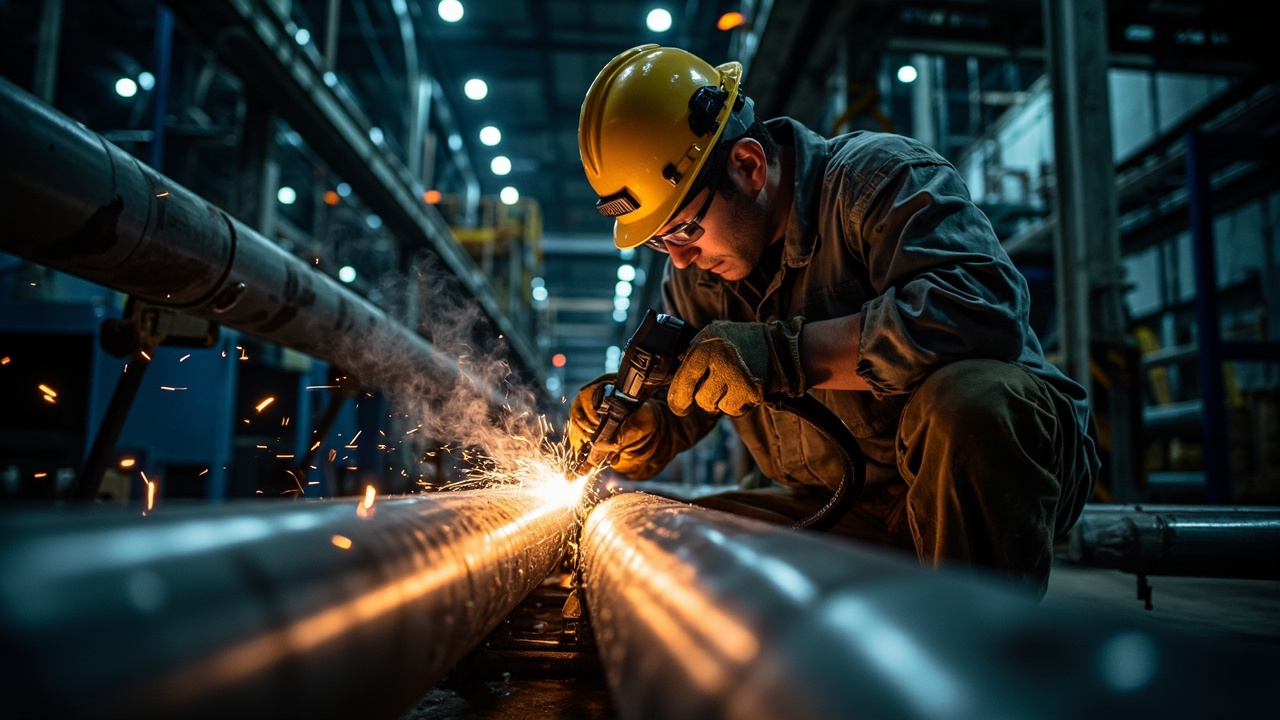
Industrial pipeline repair requires precision you will not find in residential plumbing. We deploy technicians with ASME Section IX welding certifications and process piping experience in pharmaceutical clean rooms, food-grade processing environments, and hazardous chemical systems.

Our approach starts with failure analysis, not guesswork. We use ultrasonic thickness testing to map remaining wall thickness in corroded sections, identifying whether you face isolated pitting or systemic degradation that demands full section replacement. Dye penetrant testing reveals stress cracks invisible to visual inspection. This diagnostic rigor prevents the costly mistake of repairing one leak only to face another failure 20 feet downstream next week.

Material selection drives long-term reliability. Baltimore's industrial applications span extreme service conditions. A steam condensate return line requires different metallurgy than a nitric acid transfer line. We match pipe material, schedule thickness, and joining methods to your specific process parameters: operating temperature, pressure rating, fluid corrosivity, and thermal cycling.

Welding procedures follow your facility's quality assurance requirements. We maintain qualified weld procedure specifications for carbon steel, 300-series stainless, duplex stainless, nickel alloys, and specialty materials. Our welders perform root passes with appropriate purge gas backing to prevent sugaring and oxidation that compromises corrosion resistance. We conduct dye penetrant or radiographic inspection per your QA manual before returning systems to service.

Hot-tap capabilities allow us to execute industrial pipe restoration on active systems when a full shutdown is not operationally feasible. We can install branch connections or repair fittings under pressure using specialized equipment that maintains system integrity throughout the procedure.

Process piping repair in pharmaceutical and food-grade facilities demands clean room protocols and material traceability. We maintain mill test reports, heat lot numbers, and weld maps that satisfy FDA audit requirements. Our technicians follow gowning procedures and contamination control protocols that protect your clean manufacturing environment.

The goal is not just stopping the leak. The goal is restoring design pressure rating, maintaining code compliance, and delivering a repair that matches or exceeds the service life of the original installation.

How Industrial Pipeline Repair Unfolds at Your Baltimore Facility

Industrial Pipe Repair in Baltimore | Minimize Downtime with Industrial-Grade Process Piping Solutions
01

System Assessment and Isolation

We coordinate with your operations team to isolate the affected process line while minimizing impact on adjacent systems. Our technicians conduct a detailed inspection using ultrasonic testing, visual examination, and pressure decay testing to determine failure extent and root cause. We review your P&ID drawings to identify tie-in points, block valves, and upstream equipment that may be affected. This phase includes developing a repair specification that addresses material selection, welding procedures, and testing protocols required to return the system to full service rating.
02

Precision Repair Execution

Certified welders execute the repair using procedures qualified for your specific pipe material and service conditions. We perform fit-up with proper gap tolerance and alignment to prevent stress concentration at weld joints. Purge gas systems protect internal weld surfaces from oxidation during stainless steel fabrication. Each weld pass receives visual inspection before proceeding to the next layer. We maintain strict heat input control to prevent metallurgical damage in heat-affected zones. Completed welds undergo non-destructive testing per ASME B31.3 requirements before we proceed to pressure testing and recommissioning.
03

Testing and Documentation Handoff

We conduct hydrostatic pressure testing at 1.5 times design pressure to verify repair integrity before returning the system to you. Pneumatic testing with nitrogen follows approved safety procedures when hydrostatic testing is not compatible with your process. You receive complete documentation including material certifications, weld maps, test reports, and photographs that satisfy your quality management system and regulatory audit requirements. We walk your maintenance supervisor through the repair scope and provide recommendations for corrosion monitoring or system upgrades that can prevent future failures in similar piping sections.

Why Baltimore Industrial Facilities Trust Keystone Plumbing Baltimore for Critical Process Piping Repairs

Your facility operates in a regulatory environment where shortcuts create liability, not savings. You need a contractor who understands that industrial piping repair services in a pharmaceutical plant demand different protocols than residential pipe work.

Keystone Plumbing Baltimore maintains the certifications and capabilities your operation requires. Our welders hold current ASME Section IX qualifications across multiple processes and base metals. We carry pipe and fittings in Schedule 40 through Schedule XXH in carbon steel, 304L, 316L, and specialty alloys, minimizing procurement delays that extend your downtime.

We know Baltimore's industrial landscape because we work in it daily. We have executed emergency steam line repairs at processing facilities in Canton, replaced corroded chemical transfer piping at warehouses near Port Covington, and performed pharmaceutical-grade process piping installation in clean rooms across the metro area. This local experience means we understand the challenges specific to Baltimore's industrial infrastructure: salt air corrosion near the harbor, freeze protection requirements for exterior piping, and the coordination required to work in active manufacturing environments.

Code compliance is not negotiable in industrial applications. We maintain current copies of ASME B31.3, ASME B31.1, and applicable FDA and OSHA standards. Our work satisfies third-party inspection requirements and stands up to regulatory audits. When you face an OSHA inspection or FDA audit, our documentation supports your compliance position rather than creating exposure.

Response time matters when production is stopped. We maintain emergency response capability for Baltimore industrial facilities facing critical failures. You get an experienced project supervisor on-site quickly, not an answering service. We bring the diagnostic tools, materials, and certified personnel required to execute repairs correctly under time pressure.

Industrial pipe rehabilitation demands problem-solving, not just parts replacement. We have addressed complex repair scenarios: working around live electrical equipment, maintaining contamination control in clean rooms, hot-tapping pressurized systems to avoid total shutdown, and fabricating custom fittings when standard components do not fit your space constraints or service conditions.

Your operation depends on contractors who deliver what they promise, when they promise it. We provide realistic timelines based on actual repair scope, not optimistic guesses that leave your production schedule in limbo.

What to Expect When You Contract Keystone Plumbing Baltimore for Industrial Pipeline Repair

Rapid Industrial Response

Critical industrial pipeline failures get immediate attention because we understand the financial impact of unplanned downtime. Our emergency response protocol dispatches an experienced supervisor to your Baltimore facility within hours of your call. We arrive with diagnostic equipment ready to assess failure extent and develop a repair plan that addresses both immediate leak mitigation and long-term reliability. You receive a detailed scope of work with realistic completion timelines before we begin cutting pipe. We coordinate our work schedule around your production requirements, executing repairs during planned shutdown windows when possible or providing 24-hour coverage to minimize downtime when emergencies demand immediate action. Our materials inventory and supplier relationships allow us to source specialty piping components quickly, avoiding the multi-week lead times that can strand your facility in extended outages.

Comprehensive Failure Analysis

Industrial pipe failures rarely occur in isolation. Before we repair the obvious leak, we investigate the root cause to prevent recurring problems. Our assessment combines ultrasonic thickness testing across the affected piping system, visual inspection for corrosion patterns, and analysis of your process conditions that may be accelerating degradation. We review your water chemistry data, operating temperatures, pressure cycling history, and maintenance records to identify whether you face a localized failure or systemic corrosion that will produce additional leaks if left unaddressed. You receive a written report documenting our findings and recommendations for both immediate repair scope and preventive measures that can extend the service life of your piping infrastructure. This diagnostic investment saves money by preventing the frustration of fixing the same problem repeatedly while your facility suffers ongoing production disruptions.

Code-Compliant Installation Quality

Industrial piping repairs that fail inspection waste time and money. Our work satisfies ASME B31.3 process piping code requirements from material selection through final pressure testing. Welds receive appropriate pre-heat and post-weld heat treatment when base metal composition and thickness demand it. We perform non-destructive testing using methods appropriate to your service conditions and quality assurance requirements: dye penetrant testing for stainless steel fabrication, radiographic inspection for high-pressure steam service, or ultrasonic testing for thick-wall piping where internal access is limited. Every fitting and valve meets your pressure and temperature rating requirements with documented material certifications traceable to heat lot numbers. Your quality assurance team receives complete documentation including weld maps, test reports, material certifications, and photographs that demonstrate compliance with your facility standards and satisfy regulatory audit requirements.

Ongoing System Support

Process piping systems require periodic inspection and maintenance to deliver reliable service life. We provide guidance on monitoring intervals and inspection methods that can identify developing problems before they cause failures. Our technicians document baseline thickness measurements at key corrosion-prone locations, giving you reference data for trending wall loss over time. We can return for scheduled ultrasonic surveys that track corrosion rates and help you plan piping replacement during scheduled maintenance windows rather than facing emergency failures. When your operation expands or process changes demand piping modifications, we bring the engineering capability and fabrication expertise to execute additions and upgrades that integrate seamlessly with your existing infrastructure. You get a long-term partner who understands your facility's specific piping challenges and can provide support as your maintenance needs evolve.

Frequently Asked Questions

You Have Questions,
We Have Answers

How much does it typically cost to fix a broken pipe? +

Industrial pipe repair costs vary by system size, material, and damage extent. Simple repairs on accessible cast iron or steel pipes typically run several hundred dollars. Complex repairs requiring confined space entry, specialized coatings, or high-pressure systems cost significantly more. Baltimore facilities dealing with aging infrastructure or corrosion from Chesapeake Bay humidity face higher failure rates. Factors include pipe diameter, location accessibility, downtime costs, and code compliance requirements. Trenchless methods often reduce expenses by eliminating excavation and restoration costs. Request detailed estimates covering labor, materials, permits, and business continuity planning to accurately budget repairs.

What is the best way to fix a leaking pipe? +

The optimal repair method depends on pipe material, leak severity, and operational requirements. For industrial systems, weld repairs provide permanent solutions for steel and cast iron. Epoxy coatings work well for pinhole leaks and corrosion damage without shutting down entire systems. Mechanical couplings offer quick fixes for cracked sections. Baltimore facilities must consider local water chemistry and environmental conditions that accelerate corrosion. Professional assessment determines whether spot repairs suffice or if section replacement prevents recurring failures. Temporary fixes create liability risks and violate most commercial building codes. Always prioritize methods that restore structural integrity and meet pressure rating requirements.

How long does epoxy pipe repair last? +

Quality epoxy pipe liners typically last 30 to 50 years in industrial applications when properly installed. Longevity depends on system pressure, temperature cycling, chemical exposure, and installation technique. Baltimore facilities with variable seasonal temperatures see excellent performance from two-part epoxy systems designed for thermal expansion. The cured epoxy creates a corrosion-resistant barrier that stops leaks and prevents future deterioration. Poor surface preparation or incorrect mixing ratios reduce lifespan significantly. Regular inspections ensure the coating maintains integrity. Epoxy repairs offer cost-effective alternatives to full replacement for systems with sound structural pipe beneath corroded surfaces.

How much should it cost to fix a leaking pipe? +

Repair costs for leaking industrial pipes range from a few hundred to several thousand dollars. Variables include leak location, pipe size, material type, and required downtime coordination. Accessible leaks in standard piping cost less than repairs requiring scaffolding, confined space protocols, or after-hours work to avoid production disruption. Baltimore facilities often face added costs from permit requirements and code compliance in older buildings. Emergency repairs command premium pricing. Budget for diagnostic inspection fees, temporary shutdowns, and testing to verify repairs meet pressure specifications. Proactive maintenance programs reduce emergency repair frequency and associated costs.

Is it cheaper to replace or repair pipes? +

Repair proves more cost-effective when damage affects isolated sections and the remaining system maintains structural integrity. Replacement makes financial sense when corrosion affects multiple areas, pipes near end-of-life expectancy, or recurring failures disrupt operations. Baltimore industrial facilities with pipes over 40 years old often benefit from strategic replacement before catastrophic failures cause equipment damage or contamination. Calculate total cost of ownership including downtime, lost production, and future failure probability. Trenchless replacement methods reduce costs compared to traditional excavation. Professional assessment of pipe condition through camera inspection or ultrasonic testing guides the replacement versus repair decision.

Will insurance pay for a busted pipe? +

Commercial property insurance typically covers sudden pipe failures from freezing, mechanical damage, or material defects. Coverage excludes damage from deferred maintenance, gradual corrosion, or normal wear. Baltimore facilities must document regular inspections and preventive maintenance to support claims. Policies vary significantly on business interruption coverage for production losses during repairs. Review your specific policy language regarding water damage, equipment breakdown, and consequential losses. File claims immediately with detailed photo documentation and repair estimates. Insurance adjusters often require professional assessments to determine if damage resulted from covered perils or neglected maintenance.

Does flex seal really stop water leaks? +

Flex Seal and similar retail products fail in industrial applications. These consumer-grade sealants lack pressure ratings, chemical resistance, and durability required for commercial pipe systems. They violate building codes and create liability exposure when applied to potable water lines or high-pressure systems. Baltimore building inspectors reject temporary fixes during compliance reviews. Industrial facilities need professional-grade solutions: welded repairs, epoxy coatings rated for system pressure, or mechanical couplings meeting ASTM standards. Temporary patches risk catastrophic failures causing equipment damage, contamination, and safety hazards. Use only code-compliant repair methods backed by manufacturer specifications and professional installation.

What is the best sealant for pipe leaks? +

Industrial pipe repairs require system-specific sealants meeting pressure and chemical compatibility requirements. Two-part epoxy compounds rated for potable water or specific chemicals provide reliable seals for pinhole leaks. Anaerobic thread sealants work for threaded connections in hydraulic and pneumatic systems. For high-pressure steam lines, only welded repairs or mechanical couplings meet safety standards. Baltimore facilities must verify products meet NSF-61 certification for drinking water applications. No universal sealant exists for all applications. Professional assessment determines appropriate materials based on pipe composition, operating pressure, temperature range, and fluid type to ensure code-compliant, lasting repairs.

How to fix a broken pipe without replacing it? +

Trenchless repair methods fix broken pipes without replacement through internal rehabilitation. Epoxy pipe lining involves cleaning, preparing, and coating interior surfaces with structural epoxy that cures in place. Pipe bursting pulls new pipe through old sections while breaking apart damaged material. CIPP (cured-in-place pipe) inserts resin-saturated liners that harden inside existing pipes. Baltimore industrial facilities benefit from these methods by avoiding excavation in tight spaces or under equipment. Mechanical couplings stabilize cracked sections externally. Each method requires professional assessment to ensure the existing pipe structure can support rehabilitation and meet ongoing operational demands.

What is 4 times stronger than epoxy? +

Polyurea coatings demonstrate tensile strength approximately four times greater than standard epoxy in certain applications. However, this comparison misleads because repair method selection depends on specific system requirements, not just tensile strength. Industrial pipe repairs require chemical compatibility, thermal stability, and pressure ratings matched to operating conditions. In Baltimore facilities, both polyurea and epoxy systems perform well when properly specified. Polyurea cures faster, allowing quicker return to service. Epoxy offers superior chemical resistance in many applications. Professional engineers evaluate system parameters including pressure, temperature, chemical exposure, and substrate condition to specify appropriate repair materials meeting code requirements and operational demands.

How Baltimore's Industrial Port Environment Accelerates Process Piping Corrosion

Facilities located near Baltimore's Inner Harbor and Patapsco River face accelerated corrosion rates driven by chloride-laden air from the Chesapeake Bay. Salt aerosols deposit on exterior piping insulation and penetrate through damaged vapor barriers, creating corrosion under insulation that degrades carbon steel and even stainless steel alloys from the outside in. Manufacturing plants in Canton, Locust Point, and Sparrows Point experience this phenomenon across steam lines, chilled water piping, and process cooling systems. The humid Mid-Atlantic climate prevents the deposited salts from fully drying out, maintaining the electrolyte conditions that drive aggressive pitting and crevice corrosion. Industrial pipe restoration in coastal Baltimore locations demands careful attention to insulation system integrity, proper selection of corrosion-resistant alloys for exterior applications, and regular inspection protocols that detect external corrosion before it produces catastrophic failures during high-pressure operation.

Baltimore's industrial facilities operate under overlapping federal, state, and local jurisdiction that demands rigorous compliance documentation. Process piping repairs must satisfy Maryland Department of the Environment requirements for facilities handling hazardous materials, FDA Current Good Manufacturing Practice regulations for pharmaceutical and food processing operations, and OSHA Process Safety Management standards for operations involving highly hazardous chemicals. Local contractors who understand this regulatory landscape deliver industrial piping repair services that meet your compliance obligations without requiring extensive oversight from your quality assurance team. Keystone Plumbing Baltimore maintains the documentation systems, material traceability protocols, and inspection procedures that satisfy these requirements. When third-party inspectors or regulatory auditors review your maintenance records, our work demonstrates your commitment to safe, compliant operation rather than creating compliance gaps that expose your facility to citations or production restrictions.
Plumbing Services in The Baltimore Area

Discover our conveniently located service hub, strategically positioned to ensure rapid response times across the region. While our office welcomes inquiries, our skilled technicians are typically out in the field, ready to bring our expertise directly to your doorstep. We are committed to serving the entire area efficiently, making sure expert plumbing assistance is always just a call away, wherever you are.

Address:
Keystone Plumbing Baltimore, 312 N Martin Luther King Jr Blvd, Baltimore, MD, 21201

Additional Services We Offer

Our news updates

Latest Articles & News from The Blogs

Adding a Luxury Wet Bar to Your Rooftop Deck in South Baltimore Imagine sipping a cocktail on your rooftop deck…

Adding a Luxury Wet Bar to Your Rooftop Deck in South Baltimore

Adding a Luxury Wet Bar to Your Rooftop Deck in South Baltimore Imagine sipping a cocktail on your rooftop deck…

Finding and Fixing Hidden Slab Leaks Under Your Beverly Hills Home

Finding and Fixing Hidden Slab Leaks Under Your Beverly Hills Home A hidden slab leak can silently destroy your Beverly…

How to Repair a Leaky Shower Valve in Your Cross Keys Condo

How to Repair a Leaky Shower Valve in Your Cross Keys Condo Living in the Village of Cross Keys means…

Contact Us

Production downtime costs money every hour. Contact Keystone Plumbing Baltimore at (443) 443-9099 for industrial pipeline repair that minimizes your outage window and delivers code-compliant results. We respond quickly to industrial emergencies across the Baltimore metro area.